Table of Contents
The most significant change in digital advertising in the past decade is not AI or big data, it is that the advantage has shifted from those who can spend the most to those who can eliminate waste the fastest. And automation is the tool that made that possible. Those advertisers who understand it mechanically are routinely outperforming those who just trust the defaults.
Automation & Digital Advertising
The Media Buyer’s Job has Fundamentally Changed
Manual bid management previously required a full-time commitment. A person would generate reports, make bid adjustments based on placement or time slot, manually create blacklists, and start the process over again every few days. This process is not sustainable and outdated decisions are made before they are even implemented.
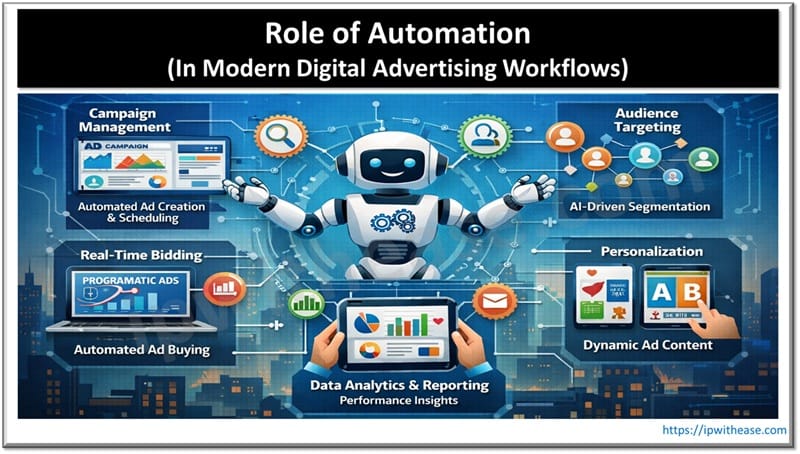
Smarter bidding systems today evaluate signals – device type, location, time of day, historical conversion data – on billions of impressions. Human operators cannot make decisions as quickly. We can only establish the proper objectives, create the parameters, and then allow the algorithm to make the decisions and optimize performance.
Media buyers are now more involved in designing campaigns and creative strategies rather than manual bid optimization. This makes better use of their talents and leads to better performance.
High-volume Formats and Built-in Optimization
Formats like pop-unders and interstitials have high engagement, and that’s great. The challenge is they create a ton of impressions in short order. This means frequency management and placement quality matter more, not less. With automation, those decisions happen continuously in the background rather than requiring constant manual intervention.
So, when evaluating potential partners, finding the best pop up ads network usually comes down to whether they provide built-in optimization tools versus requiring you to actively manage pop-under and interstitial campaigns manually. Ideally, they should offer Dynamic Creative Optimization, automated frequency capping to not exceed profitable bounds on individual eyes, and ad fraud pre-bid blocking based on the hugely increased impression rates per endpoint.
If you have to optimize, track your total spend, and make micro-bid adjustments based on half of your placements by hand, you’re wasting your time with these ad networks.
Data Silos are What Actually Break Automation
Automation will function as intended if you feed the right data into it. Most campaigns don’t fail because the model doesn’t work, but because the data isn’t there or isn’t reliable.
A disconnected adtech stack is usually to blame for this issue. When your demand-side platform can’t have a conversation with your conversion tracking, the model can’t understand which impressions are driving revenue. It instead optimizes for proxies and your CPAs increase, with no explanation for why that’s happening.
In this scenario, the best “fuel” you can use is your first-party data. With conversion events sent back properly through postbacks and audience segments created using real customer data, your automated model will be as precise as possible. It’s not a sexy job, but it’s necessary if you really want to scale up your campaign.
Keep a Human in the Loop
Relying too much on automation can lead to a breakdown. Algorithms work to achieve the goal you set, but they cannot distinguish what is brand safe, contextually appropriate, or understand why certain advertising placements may be profitable in the short term but harmful in the long term.
An autonomous system that runs on its own will find inventory that reaches your CPA goal, but it will also reach places where your ads have been placed in environments you wouldn’t approve of manually. Regular placement audits and the management of an exclusion list are not something you completely automate, they are the human part that ensures the machine is working correctly.
So, your best bet is a human-in-the-loop model. Automation takes the volume, speed, and real-time bidding decisions. People make the call on which creatives resonate best with the brand, which publisher categories to blacklist, when to kill a campaign because despite the numbers it’s going nowhere. These two are not at odds; they are meant to work together.
Working with the Algorithm, not around it
Currently, the most successful advertisers are not resisting the platform’s functioning; instead, they are creating campaigns based on it. This implies that the creative should be organized in a way that DCO (Dynamic Creative Optimization) has real variables to test. It means that smart bidding should be allowed to exit the learning phase before incorporating any changes. It implies that the algorithm should be considered as a partner that requires precise and understandable directives and requirements.
Automation resolves the problem of scalability which manual processes were never capable of. Advertisers who reach that point quicker are those that stop seeing it as a shortcut and begin considering it as part of their system.
ABOUT THE AUTHOR

IPwithease is aimed at sharing knowledge across varied domains like Network, Security, Virtualization, Software, Wireless, etc.