Table of Contents
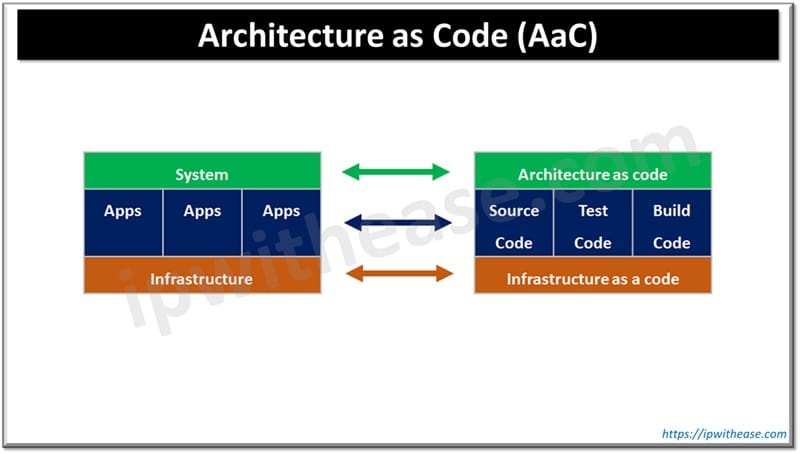
Architecture as Code refers to describing and managing software architecture (components, relationships, decisions) using machine-readable definitions, enabling version control and automated validation of architectural rules. Whereas, Infrastructure as Code refers to provisioning and managing infrastructure (servers, networks, databases) through code/config files (like Terraform or Ansible) to automate deployment, configuration, and lifecycle. AaC defines what the system looks like structurally and IaC defines how the infrastructure is provisioned to run it. Let’s understand the key differences between the two in detail.
Infrastructure is the base and combination of a set of components such as servers, data centers, network devices, software (operating systems), web servers etc. which are needed to support a business application to function. Traditional on-premises setups were done manually by a team of specialists but as cloud computing and virtualization emerged the concept of managing infrastructure as a code also evolved. In IaC setting up new infrastructure was not cumbersome, it used automated scripts to provision on-demand infrastructure for businesses.
Architecture covered the design and structured blueprint of its components. When architecture is moved from static diagrams, flow charts to dynamic context which auto aligned itself with changes in infrastructure that gave emergence of a new era where architecture definitions became a code which was manageable, could be edited and updated.
What is Architecture as Code? AaC
Architecture as code goes one step ahead of Infrastructure as Code and focuses on designing and architecture of the entire system. Managing architecture as code enabled architects to define, manage and revise version controlled architectures in similar fashion as software code. The declarative modelling languages such as PlantUML, Mermaid, Structurizr help in automating, visualizing and validating the architecture in a real sense. It is coupled with ArchOps (architecture operations) to establish ongoing governance and real-time validation of architecture with actual setup.
What is Infrastructure as Code? IaC
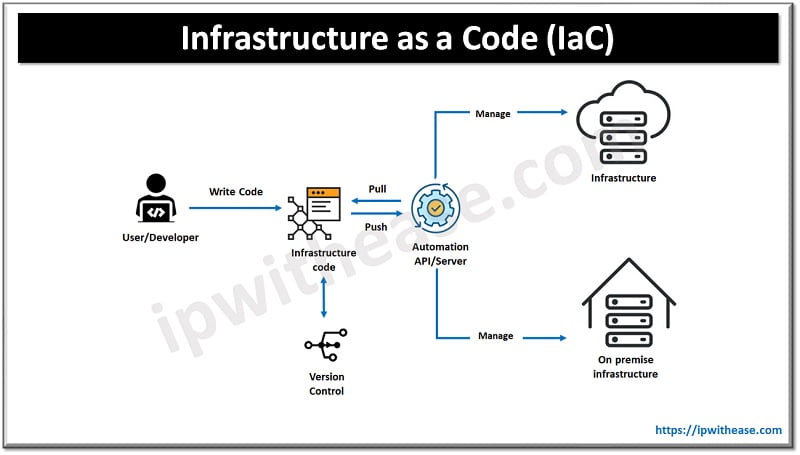
Traditionally IT infrastructure components such as servers, network, storage etc are provisioned manually by a bunch of skilled staff. There is no self-service portal available to provision resources by a click in traditional setups. The provisioning being manual it might take days and weeks to be ready for service depending on the efforts required as per complexity of requirements.
With cloud computing and virtualization technologies, provisioning of infrastructure is becoming much easier as most complex configurations can also be achieved with a set of clicks in self-service portals provided by cloud providers where they take care of physical infrastructure and customers can provision infrastructure virtually without much effort that does not require specialized knowledge also.
All this is API driven as cloud providers expose APIs to interact with their cloud platform to aid in infrastructure provisioning. Any programming language can be used to manage the IT infrastructure due to API based architecture and resources can be provisioned using automated scripts in CI/CD pipelines.
Use of code to configure and provision infrastructure is popularly known as IaC. There are several IaC tools available in the market such as Terraform, Ansible, Chef, Puppet etc.
Comparison: Architecture as Code vs Infrastructure as Code
| Features | Architecture as Code (AaC) | Infrastructure as Code (IaC) |
|---|---|---|
| Purpose | Deals with structural architecture and interconnections between its components | Automate the provisioning of infrastructure components such as servers, containers, storage, network etc. using code |
| Focus | The blueprint of the system | The platform that runs the system |
| Scope | Logical/architectural layer (services, boundaries, patterns, constraints). | Physical/cloud resources (VMs, networks, storage, managed services). |
| Level of Abstraction | High – logical & conceptual | Low to mid – physical & operational |
| Approach | Validation of architectural characteristics in automated manner, text-based modelling languages are used to do version control and ensure architecture diagrams are up to date | Outcome is no drift in configuration in infrastructure provisioning |
| Objective | Enforcing architectural principals, standardization and visualization | Bulk provisioning without configuration drifts and consistency in deployments |
| Primary owners | Architects, design leads, governance teams. | DevOps, SREs, platform/cloud engineers. |
| When used | During design, review, and governance; informs IaC and implementation. | During provisioning, deployment, scaling, and operations. |
| Benefits | Improves consistency of designs, enables automated governance and design review. | Faster provisioning, reproducibility, versioned infra, lower manual ops. |
| Challenges | Bridging abstract models to concrete implementations; tooling maturity. | Managing secrets, drift, complex state, cross-cloud variations. |
| Change frequency | Less frequent; changes reflect design evolution and strategy. | More frequent; changes during deployments, scaling, ops. |
| Relationship | AaC describes what to build | IaC defines how to provision the platform to run it |
| Tools available | Mermaid, PlantUML, Structurizr, Backstage, Archi, ADR tools | Terraform, Chef, Puppet, Ansible, AWS CloudFormation, Pulumi |
Download the comparison table: AaC vs IaC
ABOUT THE AUTHOR

You can learn more about her on her linkedin profile – Rashmi Bhardwaj