Table of Contents
While moving from LTE to 5G technology sounds like a natural progression for telcos, it does come with its own set of unique challenges. Operators have to face new architectural complexities, many of which center on interconnectivity and roaming.
In addition to operational issues, increased complexity results in new security vulnerabilities. To address most of these problems, telcos rely on Security Edge Protection Proxy (SEPP), an advanced solution that protects communication between different mobile networks. Besides serving as a modern compliance tool, SEPP is often seen as a strategic investment for companies seeking to enhance protection and enable seamless roaming.
What Is Security Edge Protection Proxy?
SEPP is an essential ingredient of every modern 5G network, serving as a non-transparent proxy at the edge of the network. The network function’s main role is to safeguard interconnect roaming messages between the source and their ultimate destination, ensuring end-to-end integrity and confidentiality.
In other words, the technology is responsible for preventing unauthorized access, verifying the message source, and stopping tampering. SEPP is a unique protective barrier that stands between internal network functions and external actors, thus patching vulnerabilities and minimizing risks.
Having such an advanced protective layer increases trust and cooperation between telcos, making it a valuable tool for both local and global roaming services. SEPP provides integrity, confidentiality, and security for 5G networks, making it a cornerstone of today’s mobile communications.
Why SEPP Matters in 5G?
Besides increasing roaming security, SEPP is also responsible for compliance and business continuity. Without implementing the technology, operators will likely encounter numerous challenges when dealing with other telcos, regulatory bodies, and other stakeholders.
Increased Roaming Security
- Transition from LTE to 5G SBA: Compared to LTE, which used the Diameter protocol, 5G relies on HTTP/2-based service communication. The new architecture is much more complex and creates a larger attack surface, which is why modern networks require security software that can keep pace.
- Integrity and Confidentiality: SEPP is essential for the transmission of messages between two operators. It offers encryption and validation, offering maximum protection for sensitive data.
- Fraud Protection: SEPP is essential for preventing unauthorized access and signaling fraud. The proxy creates an additional layer of security for the network’s functions.
Regulatory Compliance
- Mandatory in Many Jurisdictions: Many regulators around the globe force operators to safeguard access for roaming partners and MVNOs. The practice is vital for seamless connectivity and fair competition, resulting in safe, streamlined cross-network communication and a great user experience.
- Global and Local Standardization: SEPP works in accordance with the current 3GPP standards, ensuring mobile network interoperability and compliance. By following these sets of rules, telcos can simplify integration and reduce international deployment complexity.
Business Trust and Reputation
- Collaboration Between Telcos: Given that SEPP is the most comprehensive security solution for 5G networks, other operators will trust you more when signing roaming agreements. Improving your partnerships supports seamless communication while reducing many inherent risks of working with other businesses.
- Roaming Hubs: Group telcos can consolidate their roaming via SEPP, improving efficiency and minimizing complexity across multiple networks. Ultimately, centralizing your efforts is vital for improving resource utilization, lowering costs, and providing a better user experience.
Strategic Benefits of SEPP
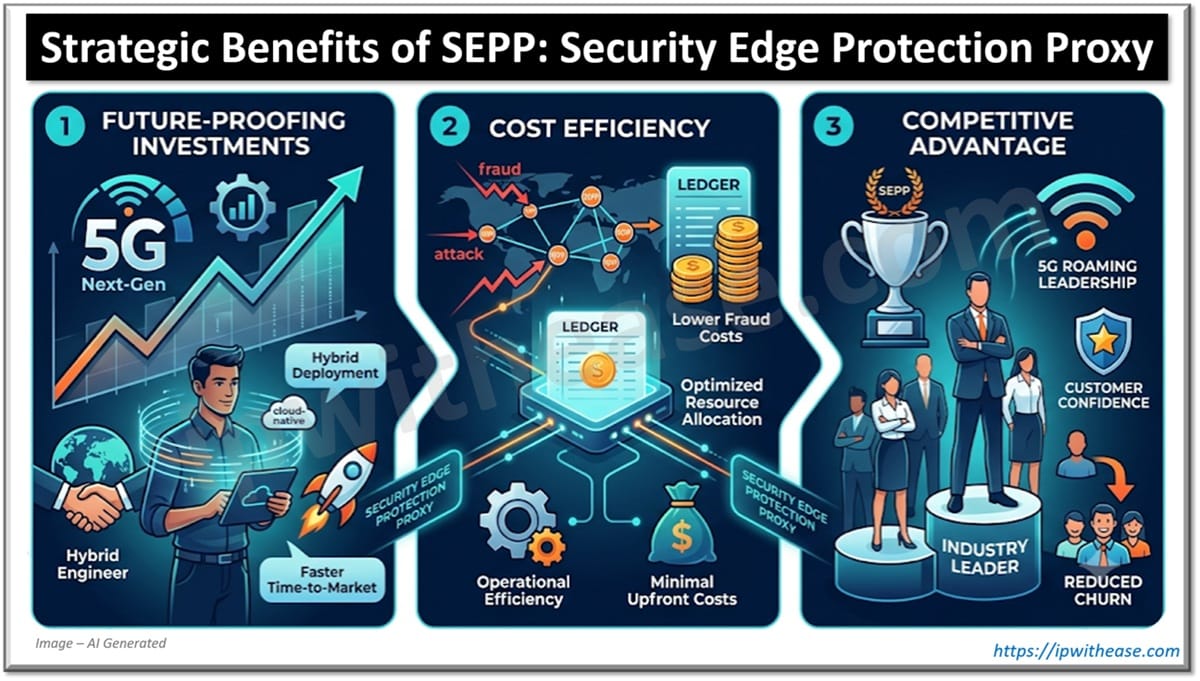
Even from a business perspective, SEPP offers numerous benefits over the competition. Basically, it is an ideal solution for right now and for the future, safeguarding your investment for years to come.
Future-Proofing Investments
- Hybrid Deployment: Security Edge Protection Proxy is tailor-made for evolving networks due to its hybrid deployment support. The technology enables telcos to switch from the traditional infrastructure to a more flexible, cloud-native environment without having to worry about potential service disruptions.
- High Flexibility: The high level of adaptability accelerates time-to-market, enabling operators to quickly realize returns on their investments. Furthermore, its advanced capabilities will likely stay relevant for years to come, so you won’t have to reinvest in new solutions.
Cost Efficiency
- Lower Fraud Costs: By mitigating potential fraud, Security Edge Protection Proxy increases network integrity and safeguards telcos from potential financial losses. The technology minimizes exposure to attacks while increasing trust among clients and other stakeholders.
- Operational Efficiency: The best way to streamline operations and reduce administrative overhead is by using SEPP to consolidate roaming functions. Besides ensuring better resource allocation, the security technology allows for faster, better service delivery.
- Flexible Deployment: Whether you wish to deploy SEPP on new or existing infrastructure, you’ll enjoy faster implementation with minimal upfront costs. The high level of flexibility improves scaling for operators without their companies suffering network operation disruptions.
Competitive Advantage
- Roaming Leadership: By introducing SEPP technology into their workflows, telcos showcase their commitment to security and innovation. This mindset puts them into a leadership position that will bring in new partnerships and improve their influence on standards and stakeholders.
- Customer Confidence: Relying on the best possible technology instills confidence in customers. This is especially noticeable among users who put security first, specifically, commercial organizations. By instilling confidence into their subscriber base, operators are able to increase loyalty and decrease churn.
The Risks of Not Using SEPP
SEPP has become a widely accepted tech standard among telcos, so there’s no real benefit to not adopting it in your workflow. In fact, not implementing this solution exposes operators to some major risks, including:
- Regulatory Non-Compliance: Companies that don’t secure their signaling traffic are more likely to face regulatory fines.
- Increased Exposure: Without proper security technology, telcos are more vulnerable to fraud, which eventually leads to reputation damage and financial losses.
- Operational Inefficiency: Not using SEPP will prevent you from streamlining roaming management, resulting in more manual labor and higher overhead.
- Customer Distrust: Whether we’re talking about the standard or commercial users, a lack of proper security technology will increase distrust and reduce loyalty.
Using SEPP for Your Business
Implementing SEPP is not really a choice. Modern telcos must introduce this technology as soon as possible to eliminate granular processes and introduce a more centralized network security. With the right platform, you can ensure compliance, increase client trust, and boost your profits.
ABOUT THE AUTHOR

IPwithease is aimed at sharing knowledge across varied domains like Network, Security, Virtualization, Software, Wireless, etc.