Table of Contents
A fintech system works with data for which a backend error can have much more serious consequences than a typical web application failure. A compromised account, a mishandled transaction, or an unavailable payment service can affect not only the user experience but also customers’ money and trust. That’s why a network architect must design the infrastructure so that it can simultaneously handle the load, restrict access, and remain manageable during incidents.
Design Your Network Around Trust Levels
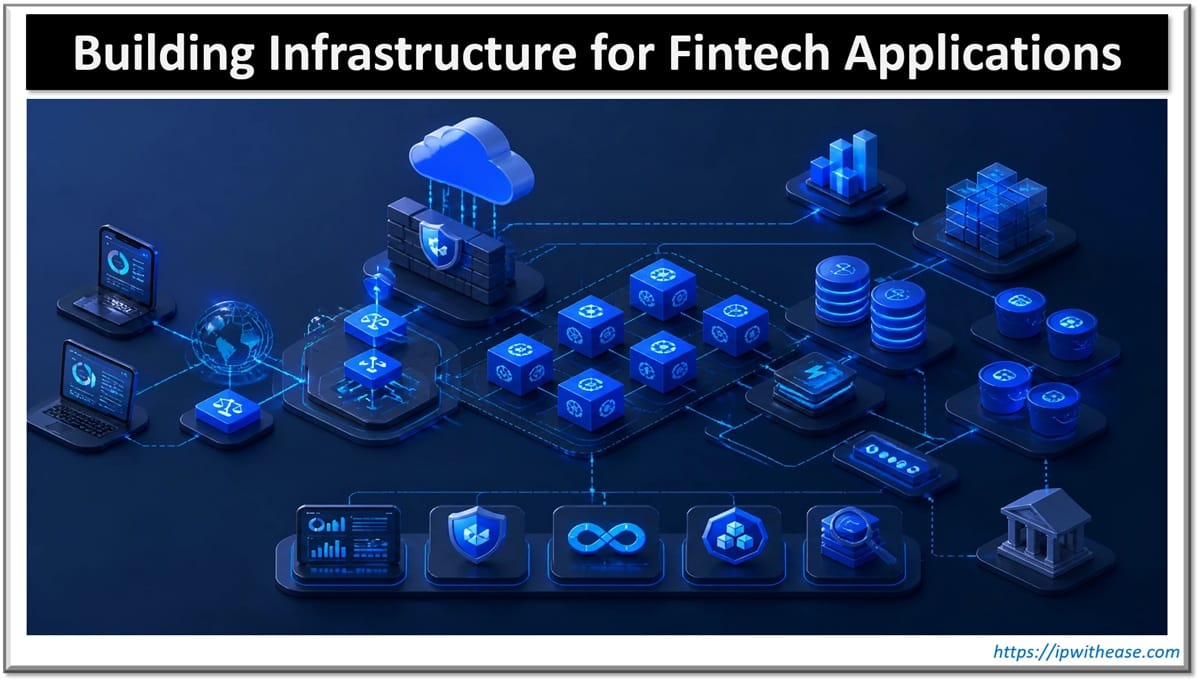
Do not place all components in a single network plane. Public APIs, app servers, databases, administrative tools, and internal services should require different access levels.
Segmentation and mitigation of compromise consequences
If an attacker gains access to a single service, segmentation should prevent them from moving freely beyond that point. To achieve this, the following are used:
● Separate network segments,
● Firewall rules,
● Control of traffic between services.
NIST also considers microsegmentation to be one of the practical components of Zero Trust Architecture. It is particularly important to separately protect repositories containing financial and personal data. An application server should be granted only the permissions necessary for a specific operation, rather than full access to the entire database.
Do not automatically trust the internal network
Zero Trust challenges the traditional assumption that a user or service is trustworthy simply because it is located within the corporate network.
Access should depend on:
✔ Identity,
✔ Request context,
✔ Required permissions.
Find the Right Balance Between Development and Infrastructure
Backend architecture doesn’t exist in isolation from the product itself. When a team plans fintech app development, decisions regarding APIs, mobile clients, databases, and integrations directly impact the network model. That’s why many fintech companies engage specialized fintech app development services to handle the application layer, while the in-house team can focus on infrastructure, security, and compliance. This approach is particularly appropriate when the product involves payments, wallets, money management, lending, or other financial transactions.
A specialized team can also select the architecture and technology stack according to the requirements of a specific product. This division of responsibilities should not result in isolated teams. Architects, backend developers, and security specialists must agree in advance on API boundaries, authentication flows, and network policies, as well as how critical operations will be handled.
Build Multi-Layered Access Protection
The FFIEC explicitly states that risks apply not only to customers but also to employees, third parties, and system communications. Based on the results of a risk assessment, MFA or an equivalent control may be required.
Control privileges separately
Administrative and service accounts require special attention. NIST emphasizes the need to monitor, audit, and control privileged accounts, as they can provide elevated access to the infrastructure.
In practice, this means:
✔ Least-privilege access,
✔ Separate roles for different operations,
✔ Regular review of permissions.
A service that only needs to read certain data should not be granted the rights to modify or delete it.
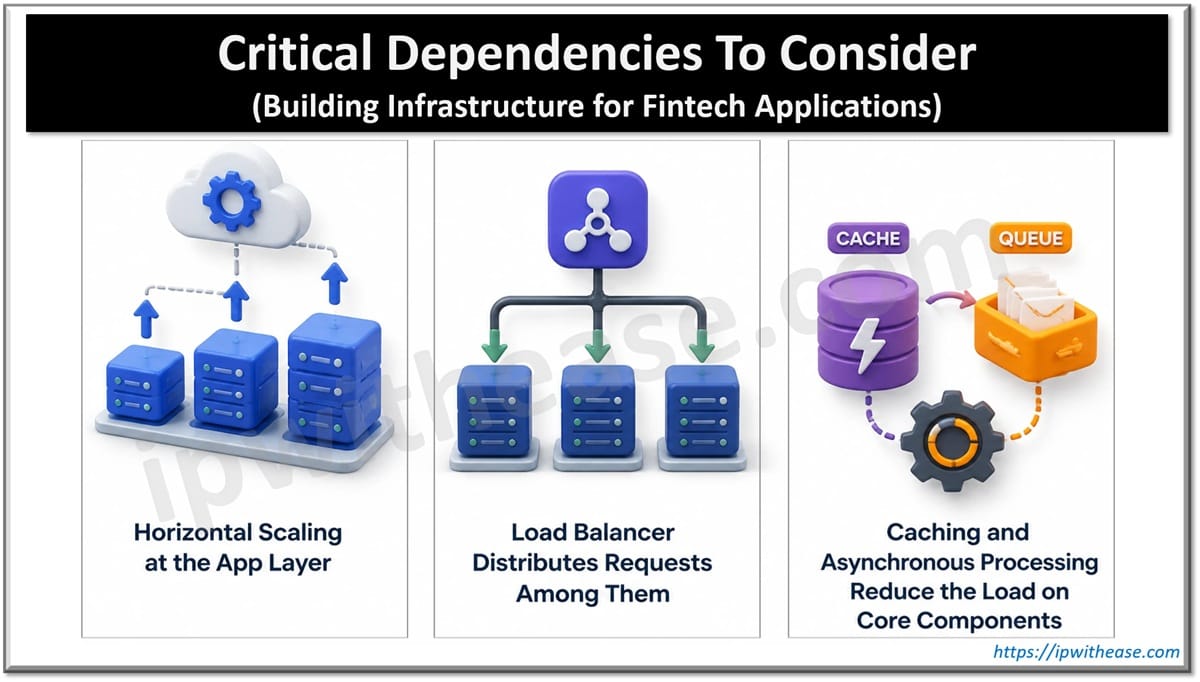
Design the Backend for Peak Loads
Financial transactions can create uneven load distribution. That’s why the architecture must scale not only the web servers but also all critical dependencies.
● Horizontal scaling at the app layer allows you to launch additional service instances as needed.
● A load balancer distributes requests among them.
● Caching and asynchronous processing can reduce the load on core components.
For operations that do not require an immediate response, message queues are useful. They allow you to separate request reception from subsequent processing. This helps avoid situations where a short-term traffic spike immediately overloads the downstream service.
At the same time, scaling should not compromise the consistency of financial data. For operations involving balances, payments, and other critical states, you must clearly define transaction boundaries, retry rules, and idempotency.
Encrypt data. Monitor network traffic
Encryption should protect data in transit and at rest where necessary. Pay close attention to API connections, internal service-to-service traffic, and channels to external financial providers.
However, encryption is no substitute for access control. Even encrypted data remains a risk if too many services or users can access it.
Build Observability Into the Architecture Itself. Incorporate AI Without Compromising Control
Without logs, metrics, and traces, a network architect cannot quickly determine:
● Why the payment API is responding more slowly,
● Where an error is occurring,
● Whether there is suspicious activity.
Logs should record important events without unnecessarily logging sensitive data. Metrics should show latency, error rates, resource utilization, and the status of key dependencies. For critical operations, it’s also important to have an audit trail that helps reconstruct the sequence of actions.
Requests to build fintech apps increasingly include AI features. However, adding a model should not bypass the existing security architecture.
AI for fintech can be used for:
● Data analysis,
● Automation of specific processes,
● Pattern recognition.
However, the model’s access to financial information must also be restricted. The AI component requires its own access rules, control over data sources, and a clear audit mechanism. If the model can trigger actions via an API, each such action must undergo the same authorization checks as a regular request.
Conclusion
A secure fintech infrastructure starts with the right trust model. This involves clearly defined zones, least privilege, controlled APIs, and transparent data flows. Scalability must also be built into the entire system. That is, from application servers and databases to queues, integrations, and monitoring. If these decisions are made before the load increases, the fintech product will have an infrastructure that can be scaled without constant compromises between performance and security.
ABOUT THE AUTHOR

IPwithease is aimed at sharing knowledge across varied domains like Network, Security, Virtualization, Software, Wireless, etc.