Table of Contents
Remove Your Personal Information Before It Spreads
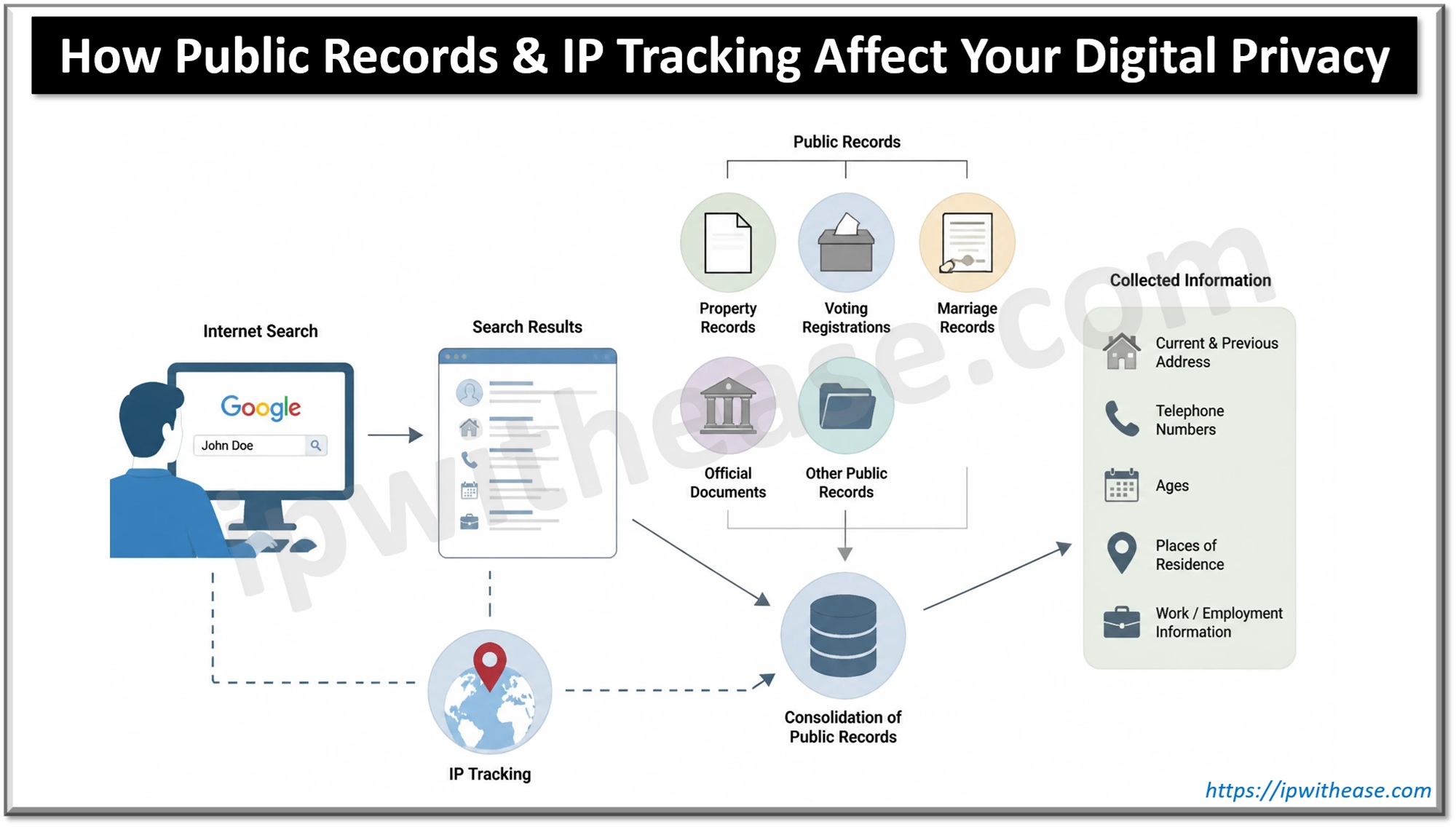
It is worth mentioning how much information can be collected through simple Internet search, like using Google. When one performs a search using his or her name, the results might include information about current and previous address, telephone numbers, ages, places of residence, and work. It all happens due to the consolidation of public records. Public records refer to official documents, property records, voting registrations, marriages records, and similar types of documents that have been created by the government. Moreover, there is a technique known as IP tracking that increases the amount of information collected.
Why Data Broker Sites Keep Selling Your Personal Data
Once personal information appears online, removing every trace becomes difficult. Data brokers collect publicly available records and combine them into detailed profiles. A simple name search can reveal someone’s home address, phone number, email address or even information about relatives. These details often appear across multiple websites, making privacy harder to maintain. While online aliasing can help separate online activities from a person’s real identity, removing existing personal information from data broker websites requires additional steps. Data removal services can help reduce this exposure and limit how easily strangers find sensitive details.
How IP Tracking Builds a Shadow Profile
IP tracking operates in the background. A connection is established between a device and the Internet. As such, the IP address becomes known, which is logged together with browsing activities. A pattern is developed through time. The buying behavior, interest toward news, search for traveling, medical information gets gathered. No register or account is required. The information from the IP address is used for creating ads unique for users and building consumer profiles. Occasionally, law enforcement requests information about the website users. Personal information is available in areas where not many people care to look at.
Let us consider one example. When someone conducts medical research using his/her home computer, a connection to the search engines is created. That connection is related to a specific IP address, which relates to a certain geographic area. The data broker combines this information and looks for publicly available information from this geographic location. Now, there is sensitive medical information combined with name and real address in the profile which could be purchased by anyone with a credit card.
Google offers tools to get some search engine results removed from its indexing. For instance, if there are outdated pages in the search results, showing a person’s phone number or even home address, one may ask Google to delete it. The result would not appear anymore in the search results on Google, but the page will remain on the web. It could take a few weeks for the cache to expire. The real deletion means contacting the owner of the website.
The Opt-Out Process and Why It Matters
Each people search website follows its own set of guidelines. Some allow for a straightforward opt-out form. Some require identity proof via scanning of your documents. There are some websites that make the opt-out form available on more than a couple of webpages. Opting out becomes necessary as failure to do so would mean keeping your personal information publicly available forever.
This is how an opt-out process works at most people search websites:
| Step | What Happens | Time Required |
|---|---|---|
| Find your listing | Search your name on the site | 5–10 minutes |
| Locate the opt-out page | Navigate to privacy or removal section | 2–5 minutes |
| Submit opt-out requests | Fill forms with verification details | 10–30 minutes |
| Wait for processing | The site reviews and processes the request | 24 hours to 45 days |
| Verify removal | Check that your information no longer appears in search | 5 minutes |
One website done. There are dozens more to go. Go through this process for all people search websites which have an entry on you. Some websites bring back their entries after a few months because old data surfaces via a backup or a fresh filing of a public record. This is why continuous monitoring is important. Data deletion companies perform this task for you. They send opt-out requests for you in hundreds of broker websites and monitor results. Both ways of doing this accomplish the same thing. Get your data deleted before it is misused
Reduce Your Digital Footprint Step by Step
Data broker removal is one strategy. But the fight is waged in many more places. There are still old social media profiles that feature photos and usernames linked to an actual identity. A username for an online forum in 2012 shows up in a Google search. Old financial profiles linked to old email addresses put your data at risk. Old company profiles give away information about you.
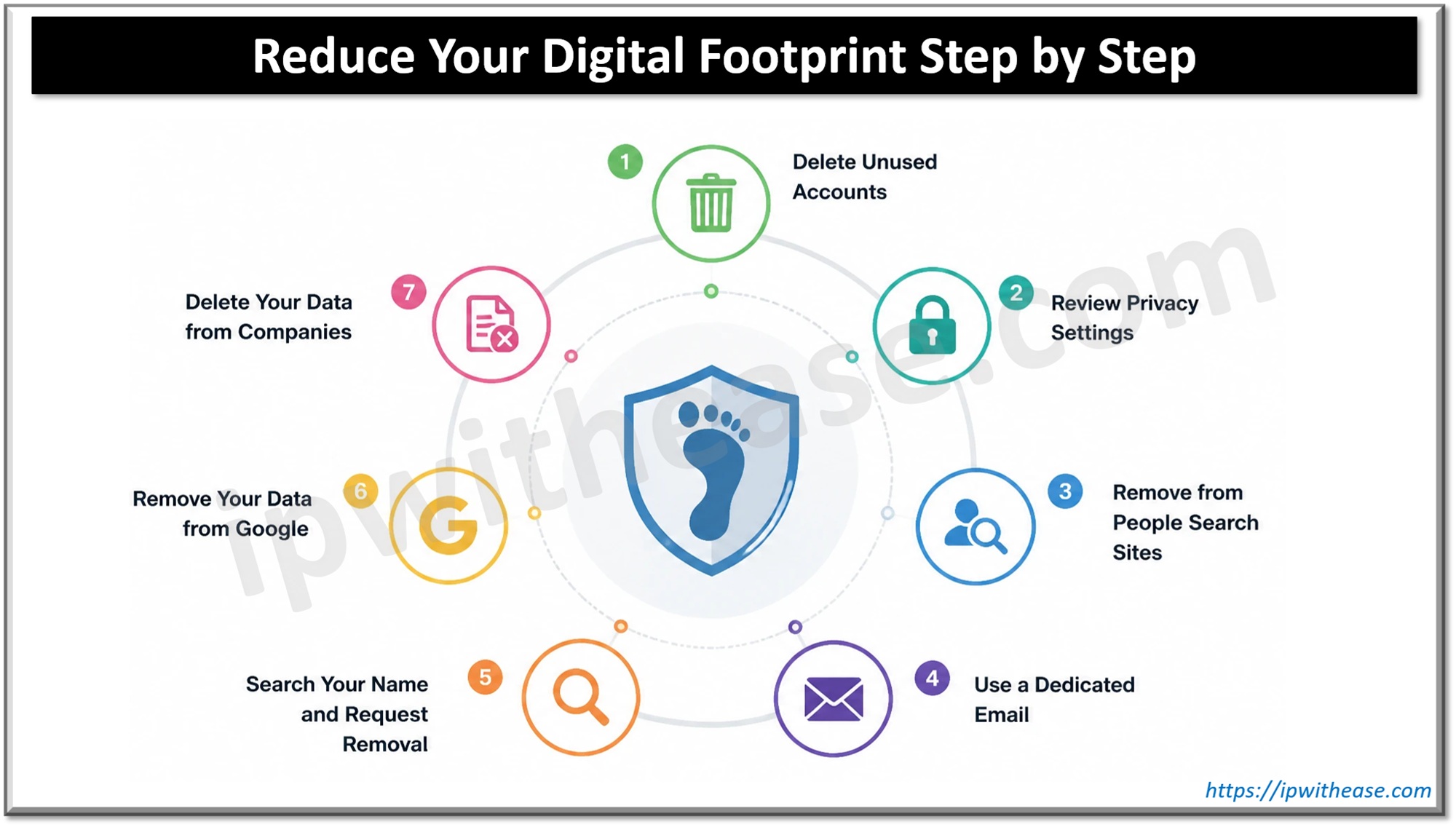
Strategies to minimize your digital footprint include:
- Delete accounts you no longer need. Close old accounts you no longer use on shopping sites and forums
- Review privacy settings on every active social media platform
- Remove your address from any people search site listing
- Use a dedicated email for online signups instead of a primary address
- Search for your name on multiple search engines and request removal of unwanted results
- Remove your data from Google by submitting a removal request through Google search tools
- Delete personal info from any company that has your information but no longer needs it
Each stage reduces the number of potential identifying pieces of information. The criminal element exploits the scattered bits and pieces. The phonebook shows one bit of information, and another piece is found by way of the background check. Banking information linked to credentials that have been compromised on the dark web. Fraudulent identity begins with bits and pieces of information.
Why Privacy Laws Alone Do Not Solve the Problem
There are specific rights given under privacy laws. The right to ask for the removal of personal information. The right to know how to get information deleted from Google and data broker sites. The right to know what a company stores. But there are many loopholes. A data broker that operates outside of the United States can disregard a delete request. A company may confirm the delete request but will not delete the listing for many months. Some data brokers relist deleted profiles since new information comes into their system regularly.
Different regions have different privacy regulations. In California, there are ways of protecting privacy that are above those available elsewhere. The GDPR has stricter legislation in Europe than in other regions. Other regions do not have such regulations. There is no uniform law for every data bank or data broker. Protect your privacy yourself instead of waiting for laws to be passed. There are cases of data breach every year in which millions of records are breached. Personal information gets exposed in healthcare and retail institutions. There are no laws which could stop data breaches once they’ve happened.
Protect What Matters Most
Many proactive approaches could be utilized in order to further the cause of privacy. First of all, one would need to delete their personal information from popular people search engines. Second, one would need to ask Google to remove links that reveal private information. It is recommended to perform a check of one’s social media accounts in order to reduce exposure. All accounts used before have to be closed and all screen names deleted. After this is done, it is important to regularly check search result pages to make sure there is no leakage of personal information.
In terms of privacy in cyber space, it can be closely associated with the privacy of any home. The information present in the public domain represents the opening of the door, whereas tracking users by their IP address is comparable to opening of windows. If the profile of a data broker is open to the general public, then it can be inferred about lack of appropriate protection. Moreover, opting out means closing a door for every single opportunity to be exposed to danger, whereas deleting accounts signifies closing down exploitable opportunities.
Frequently Asked Questions
Q.1 Will I still be identified on public records as a landlord or employer even if I get rid of the information on data brokers?
Information in the form of land title documents and other forms of government records is still accessible through official means. While removing the file from data broker companies may make the information harder to access via an internet search, the actual information in the form of government records does not disappear.
Q.2 Is it true that a VPN prevents a user’s IP from being tracked completely?
Yes, a virtual private network does hide an IP address; however, it doesn’t stop users from being tracked using other means like fingerprinting and staying logged into accounts. Cookies and tracking IDs make it possible to track users regardless of whether they use a virtual private network or not.
Q.3 How frequently do data brokers review their files?
Based on several sources of data broker firms, their databases get updated regularly. Update periods may range from 30 to 90 days, while constant monitoring plays an important role in detecting reinsertions of the content into data broker databases.
Q.4 Are pages that have been taken down stored in the search engines’ cache?
The act of deleting a particular page by the owner of the page could see remnants of that same page appearing within the cache within a specific period. The submission of a takedown notice hastens the process. Within Google, clearing of the cache usually happens within a few days after the receipt of such a takedown notice.
Q.5 Can my IP address expose my location?
An IP address can reveal general information about a particular geographic area but does not point to a specific location or a street address. But when information from public databases is combined with IP addresses, it makes it much easier to track the exact place where the user is located.
ABOUT THE AUTHOR

IPwithease is aimed at sharing knowledge across varied domains like Network, Security, Virtualization, Software, Wireless, etc.