Table of Contents
When creating visual content once, one had to open up the design software, select a canvas and start creating each component manually. Nowadays, image generators are able to create an image given a short description. Both methods help people communicate ideas, yet they approach creative work differently. The selection will impact speed, accuracy, costs, and control. It’s a good idea for marketers, students, business owners and designers to learn about those differences so they can choose the right tools for them.
How Each Approach Works
Online Image Generators
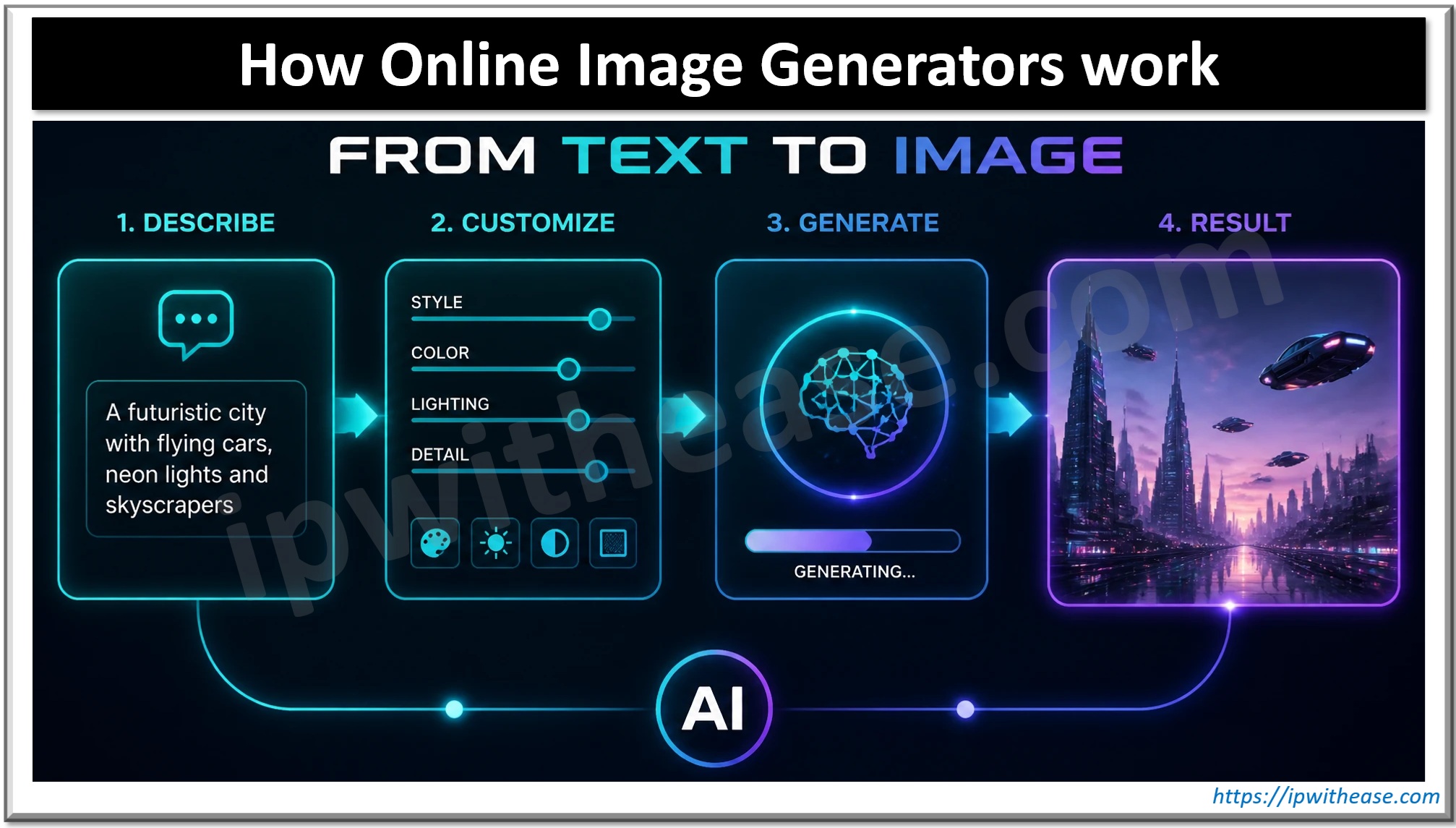
Online image generators turn written prompts into visual content. Users state their purpose, adjust the settings, and peruse the results. Use of an AI image generator online is a great way for users to experiment with various visual styles, test their concepts, and create images without having to construct all the components by hand. It begins with a text description, but it may take some tweaks to get the perfect result.
Traditional Graphic Designers
Traditional graphic design software has a different approach. The programs provide layers, vector shapes, brushes, editing tools, which allow the user to create and edit individual parts of a shape. Positioning, typography, textures and colours are under the control of the designer. This method involves technical skills, but is more precise. The AI vs graphic design comparison is thus more than just about tools. It also relates to the users’ degree of control over the outcome.
Speed and Creative Control
Early exploration, image generators work quickly. With a little prodding, these ideas will start to emerge that you would not have come up with on your own at that moment by drawing them out. But the quickest doesn’t always mean the best. Generated images can be distorted, have irregular lettering or elements that defy directions.
The traditional software requires more work initially. After the layout is completed, though, the individual elements can be adjusted easily. Typically it takes very little time to move a logo, to change a headline or match a client’s exact colors.
There are a number of practical distinctions:
- Concept development. Generators rapidly suggest visual directions; manual tools help develop one direction in detail.
- Revisions. Prompt changes may alter an entire image; layers allow targeted edits.
- Consistency. Saved templates preserve spacing and colors; generated outputs may vary between attempts.
- Precision. Traditional tools offer reliable dimensions and alignment; generated details need closer inspection.
But both are not successful in every task. Quick mood boards and print-ready packaging labels use different tools.
Skills and Learning Curves
Many people can start using online image generators without studying composition or drawing techniques. They must still present topics clearly, evaluate results and identify visual errors. It helps to have strong prompts, but judgment matters more than clever wording.
Traditional vs digital design is sometimes framed as a choice between old and new methods. This does not take into account one important fact: traditional graphic design software is digital software as well. The actual distinction is between creating an image automatically and using a series of edits to arrange and manipulate the components.
Completing a course on professional software will take time. The user needs to have knowledge of layers, file formats, resolution, and typography. It is useful when a project requires several changes to be made, or when specific production needs are needed.
Costs, Ownership, and Practical Limits
Many online services provide some free use of the sites followed by subscription or use credits. Repeated experiments can be costly if images are created on a frequent basis. Traditional applications may also charge subscriptions, while some offer one-time purchases or free alternatives. There are also additional costs due to equipment and training.
Before making a decision on either option, think about these questions:
- Do you need it to be editable in layers or vectors?
- Are branding elements needed to be consistent throughout multiple assets?
- Is the terminology of commercial rights and uses clear?
- Does the workflow safeguard information that is sensitive to the client?
- Who will review the factual information, who will ensure it is accessible, and who will review for potential copyright issues?
There may be different terms on different platforms, so users should read the terms before publishing or selling an image. AI-generated images can also feature similar art styles to what was originally created, rather than being an exact replica. It is still important to have human review.
Where Both Methods Work Together
Image generators and traditional design tools need not compete. A designer may create background ideas, choose an intriguing composition and reconstruct key aspects of it within editing software. Another group might create images internally for presentations, and produce typography-controlled graphics for customers.
This hybrid approach works best for those campaigns that require speed and consistency. It also offers the ability to reserve detailed manual work for the most critical assets. Nonetheless, the content created needs to be reviewed for misinterpreted visual statements, bizarre anatomy, or incorrect cultural context.
The AI vs graphic design debate becomes more useful when framed around tasks, not professional identities. Tools are tools – the designer is still responsible for the decisions made.
Conclusion
Use online image generators for quick experimentation or for a variety of images. For situations where exact edits and reproducible layouts and production files are more important, use traditional graphic design software. In many projects it is feasible to use both methods. Regardless of the tool, with clear goals no effort is wasted. The ideal workflow begins with the target audience, the desired finalized product, and the degree of control needed on the work.
ABOUT THE AUTHOR

IPwithease is aimed at sharing knowledge across varied domains like Network, Security, Virtualization, Software, Wireless, etc.