Table of Contents
A VPS often becomes relevant when shared hosting no longer gives a website enough room to work properly. At that point, the monthly price is easy to compare. The harder part is understanding what each plan will require after the server is active.
Two plans may look similar on the pricing page but work very differently in practice. One may be ready for everyday use, while another leaves server setup, maintenance, and problem solving entirely to you. The cheaper option can also become more expensive when the website needs additional resources or services.
The vps hosting price should therefore be considered together with the work the server can handle, the help included with the plan, and the costs that may appear as the website grows.
What a VPS Changes in Practice
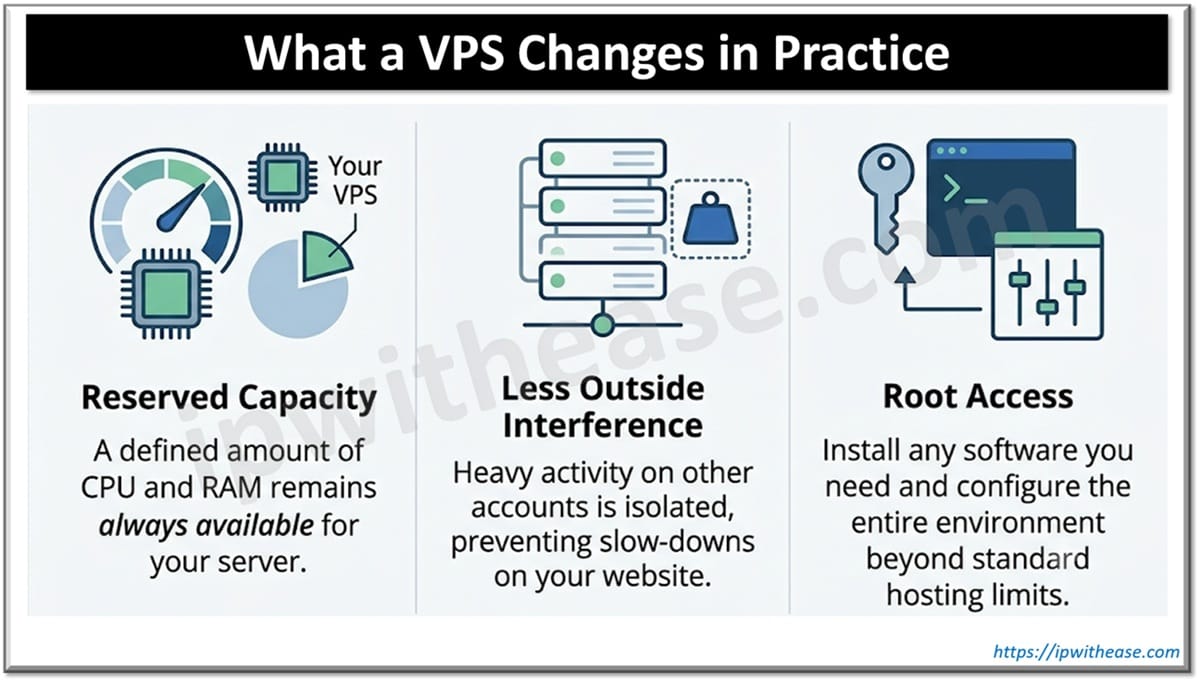
A VPS gives the website its own virtual environment within a physical server.
The practical differences include:
- Reserved capacity: A defined amount of CPU and RAM remains available for the server.
- Less outside interference: Heavy activity on another account is less likely to slow down the website.
- Root access: You can install the required server software and manage the environment beyond the limits of a standard hosting account.
Together, these changes give the website a more independent place to run.
The Right Resources Depend on the Workload
A small company website may only serve a few pages, images, and contact forms. Its demands remain modest. An online store works differently. Dynamic platforms run heavy code. Catalog queries, user profiles, and active filtering scripts force the system to compute data constantly as visitors navigate.
CPU handles those active tasks, while RAM keeps frequently used data available during busy periods. Adding more of either does not automatically create better value. The configuration should reflect how much work the website performs at the same time.
Important Actions Need Stable Performance
Opening a standard page places little pressure on the server. More demanding actions work differently. Processing a payment, generating an invoice, or saving user input triggers deep database changes. These multi-step interactions require steady power until the final confirmation finishes.
A slowdown during an ordinary page view may cause brief frustration. The same delay during checkout can stop a transaction entirely, while an administrative lag in the dashboard prevents employees from processing orders efficiently.
Consistent performance helps these actions reach completion. Customers can finish purchases, and internal work continues without being interrupted by sudden drops in server performance.
A Lower Price Can Leave More Work Behind
An unmanaged VPS may look like the better deal at first. The server is available, the monthly charge is lower, and the company has full control over the setup. That control also means someone has to prepare the system and keep it running.
Security updates cannot be ignored. Backups need to be configured and checked. Firewall settings, software versions, and unexpected errors also require attention. For a business with its own system administrator, this may be part of the normal workload. For everyone else, it can take time away from development, sales, or customer work.
Managed service adds to the monthly cost, but it reduces how much of this routine stays inside the company. The better choice depends on which resource is easier to provide: technical expertise or a larger hosting budget.
The Monthly Rate Is Only Part of the Cost
The price shown for a VPS may cover only the basic service. Daily use can bring additional charges that are easy to overlook during the first comparison.
These may include:
- Management: Technical work may be included or charged separately.
- Backups: More storage or longer backup history can increase the monthly bill.
- Software Overheads: Management interfaces or specific OS licenses often require separate fees.
- Optional services: Some features required by the business may not be part of the original plan.
The renewal price may be much higher than the introductory rate. That difference should be included in the budget from the start, together with any services the business will continue to use.
Check How the Plan Can Be Upgraded
A website may need more capacity after a product launch, catalogue expansion, or steady growth in customer activity. Before choosing a VPS, check how the provider handles the next stage.
Important questions include:
- Can the current plan be expanded without moving the website?
- Will the upgrade require downtime?
- Does the provider handle the change, or will the company need technical help?
- Can the plan be reduced again if the extra capacity is no longer needed?
- How will the upgrade affect the monthly price?
These details determine whether growth requires a simple plan change or a separate migration project. Moving an active website means copying and testing it while protecting recent orders, customer data, and normal access. A clear upgrade path can remove much of that work.
What Makes VPS Costs Easier to Control
A VPS becomes easier to budget when the company can decide how much technical work it wants to manage internally. Managed and unmanaged options allow businesses to match the service level to their own experience, available time, and operational needs.
Other practical factors also affect the long-term value:
- NVMe storage that supports faster database requests and website operations
- renewal prices shown in advance
- the ability to increase server resources without migrating the website
- technical support available when problems require outside assistance
These details make the total cost easier to understand. The business can see what is included, choose the level of management it needs, and avoid paying for services that do not match the way the server will be used.
Conclusion
A VPS should reduce the amount of attention a website requires. Pages should remain available, customer actions should work as expected, and the server should not become another issue that has to be checked every week.
Initial invoices say very little about the daily operational reality. A virtual server justifies its budget when your digital presence remains steady, hidden technical expenses disappear, and your team can focus fully on growth.
Clear pricing, balanced management choices, and infrastructure that stays out of the daily routine make that setup possible. For businesses that require dependable performance without technical uncertainty, this remains a practical approach.
ABOUT THE AUTHOR

IPwithease is aimed at sharing knowledge across varied domains like Network, Security, Virtualization, Software, Wireless, etc.