Table of Contents
Proxy type matters because the proxy endpoint determines how the destination server classifies the request. A server does not only see an HTTP request or TCP session. It can also evaluate the apparent ASN, IP ownership, routing path, geolocation, latency profile, DNS behavior, TLS fingerprint, request cadence, cookie history, and whether the IP range is associated with datacenters, fixed-line ISPs, or mobile carriers.
Mobile proxies and residential proxies are often grouped together because both can present traffic from non-datacenter IP space. Technically, however, they are not the same. Residential proxies use IP addresses assigned to fixed broadband subscribers through ISPs. Mobile proxies use IP addresses associated with cellular carrier networks such as LTE or 5G. That difference affects routing, session stability, rotation, cost, performance, and operational risk.

Start With The Network Source, Not The Marketing Label
The first technical distinction is the origin of the public-facing IP address. Residential proxies route traffic through IP addresses allocated to fixed broadband networks. These may belong to cable, DSL, fiber, or other household internet providers. When traffic exits through such a proxy, the destination server usually sees an IP range associated with a consumer ISP rather than a cloud hosting provider.
Mobile proxies route traffic through a carrier-assigned mobile network IP space. In practice, mobile proxies are often described in terms of 3G, 4G, LTE, or 5G connectivity, rotating carrier IPs, location selection, session control, and use cases such as mobile ad verification, market research, price comparison, public web data access, and cybersecurity monitoring. A typical service page in this category presents mobile IPs as a way to test or collect data from a network environment closer to real cellular users than a datacenter server or fixed broadband line.
How Residential Proxies Work
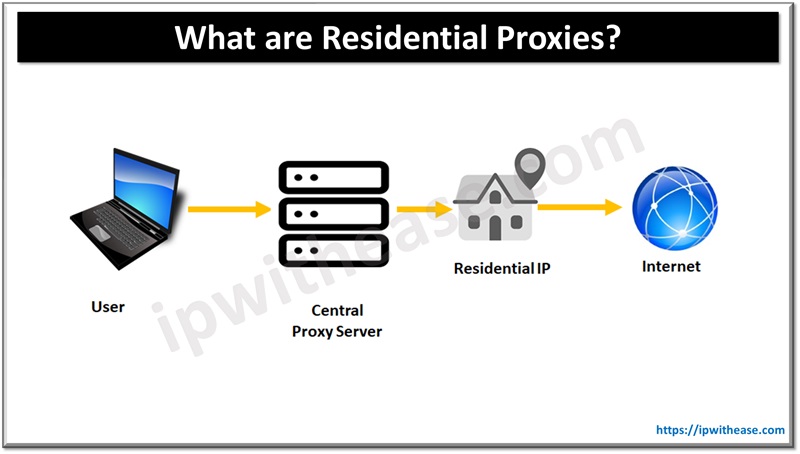
A residential proxy forwards client traffic through an IP address assigned by an ISP to a residential endpoint. The proxy service may provide this through a managed pool of residential IPs. Depending on the provider, sessions can be rotating or sticky.
With a rotating session, the egress IP changes after a defined interval, request count, or reconnection event. With a sticky session, the provider keeps traffic pinned to the same residential IP for a period of time. Sticky sessions are important when a workflow requires continuity, such as testing a localized user journey, maintaining a shopping cart, or checking how a site behaves over several sequential requests.
Residential proxies are commonly used where the test condition needs to resemble fixed consumer broadband. Examples include regional search result validation, public pricing checks, localized content testing, brand monitoring, availability checks, and competitive research based on public pages.
How Mobile Proxies Work
Mobile proxies use IP addresses associated with cellular networks. These networks frequently rely on Carrier-Grade NAT, also called CGNAT. Under CGNAT, many mobile users may share a smaller pool of public IPv4 addresses while the carrier maps internal subscriber sessions to external IPs and ports.
This has important consequences. A destination service may see many unrelated users coming from the same public mobile IP. Because mobile carriers routinely reuse and rotate public IPs, a mobile IP can have a different trust and blocking profile from a datacenter IP or even a fixed residential IP.
Mobile proxies are relevant when the network condition itself matters. If a team needs to test mobile landing pages, carrier-based routing, mobile ad delivery, app flows, region-based mobile experiences, or how a service responds to cellular IP space, a residential proxy may not be technically equivalent.
However, mobile proxies are not inherently faster or more stable. Cellular routing can introduce variable latency, jitter, packet loss, and throughput changes depending on carrier load, signal conditions, proxy infrastructure, and location. For workflows that require high bandwidth or very stable sessions, mobile proxies may be less predictable than fixed residential or ISP proxy options.
Key Technical Differences
The most important difference is IP allocation. Residential proxies use fixed-line ISP allocations, while mobile proxies use cellular carrier allocations. This affects ASN classification, reputation, geolocation accuracy, and how destination services interpret the traffic.
The second difference is NAT behavior. Residential connections may use dynamic public IPs, but cellular networks commonly rely on CGNAT at scale. This means mobile IPs can represent many subscribers, which can make them useful for mobile realism but also harder to attribute cleanly.
The third difference is session behavior. Residential proxies can often provide longer sticky sessions. Mobile proxies may support session persistence, but IP rotation can be influenced by carrier behavior, provider settings, or modem reconnection logic.
The fourth difference is performance. Residential proxies may offer more stable latency and bandwidth when the underlying fixed connection is strong. Mobile proxies can provide more realistic cellular behavior but may show higher variability.
The fifth difference is cost. Mobile proxy infrastructure is usually more expensive because it depends on cellular connectivity, SIM or carrier arrangements, modem infrastructure, location management, and rotation controls.
Comparison Table: Mobile Proxies vs Residential Proxies
| Parameter | Residential Proxies | Mobile Proxies |
|---|---|---|
| IP Allocation | Fixed-line ISP allocations. ASN classification, reputation, and geolocation accuracy all reflect standard residential assignments. | Cellular carrier allocations. ASN and geolocation reflect mobile networks; destination services interpret traffic as mobile-origin. |
| NAT Behaviour | May use dynamic public IPs but typically do not operate behind large-scale CGNAT. IPs are more attributable to individual connections. | Commonly rely on CGNAT at scale — a single IP can represent many subscribers. Useful for mobile realism; harder to attribute cleanly. |
| Session Behaviour | Often support longer sticky sessions. IP changes are provider-controlled and more predictable. | Session persistence is supported but rotation can be influenced by carrier behavior, provider settings, or modem reconnection logic. |
| Performance | More stable latency and bandwidth when the underlying fixed-line connection is strong. | More realistic cellular behavior but higher variability in latency and throughput by nature. |
| Cost | Generally lower — fixed-line infrastructure is simpler and does not require carrier arrangements. | Usually more expensive due to SIM/carrier arrangements, modem infrastructure, location management, and rotation controls. |
Risks And Controls
Proxy use creates technical and compliance risks.
- The first is sourcing. A provider should be able to explain how IPs enter its network, whether consent exists where relevant, and what abuse controls are in place. Unclear sourcing can create legal and reputational exposure.
- The second risk is policy violation. Even public websites may restrict automated access, scraping, account creation, or high-volume requests. A technically successful connection does not mean the activity is permitted.
- The third risk is data quality. IP geolocation can be inaccurate, proxy pools can be contaminated by prior abuse, and rotation can break session-dependent tests. Teams should validate proxy output before using it for decisions.
- The fourth risk is security. Credentials, cookies, headers, and request payloads may pass through proxy infrastructure. Sensitive workflows should require encryption, provider review, access controls, and clear logging policies.
Endnote
Residential proxies and mobile proxies are not interchangeable. Residential proxies are best understood as fixed ISP-based egress points suitable for regional testing and broadband-user simulation. Mobile proxies are cellular carrier-based egress points suited to mobile-network testing, ad verification, and carrier-sensitive workflows. The correct choice depends on the required network identity, session behavior, latency tolerance, compliance posture, and whether the use case genuinely requires mobile IP space.
ABOUT THE AUTHOR

IPwithease is aimed at sharing knowledge across varied domains like Network, Security, Virtualization, Software, Wireless, etc.