Table of Contents
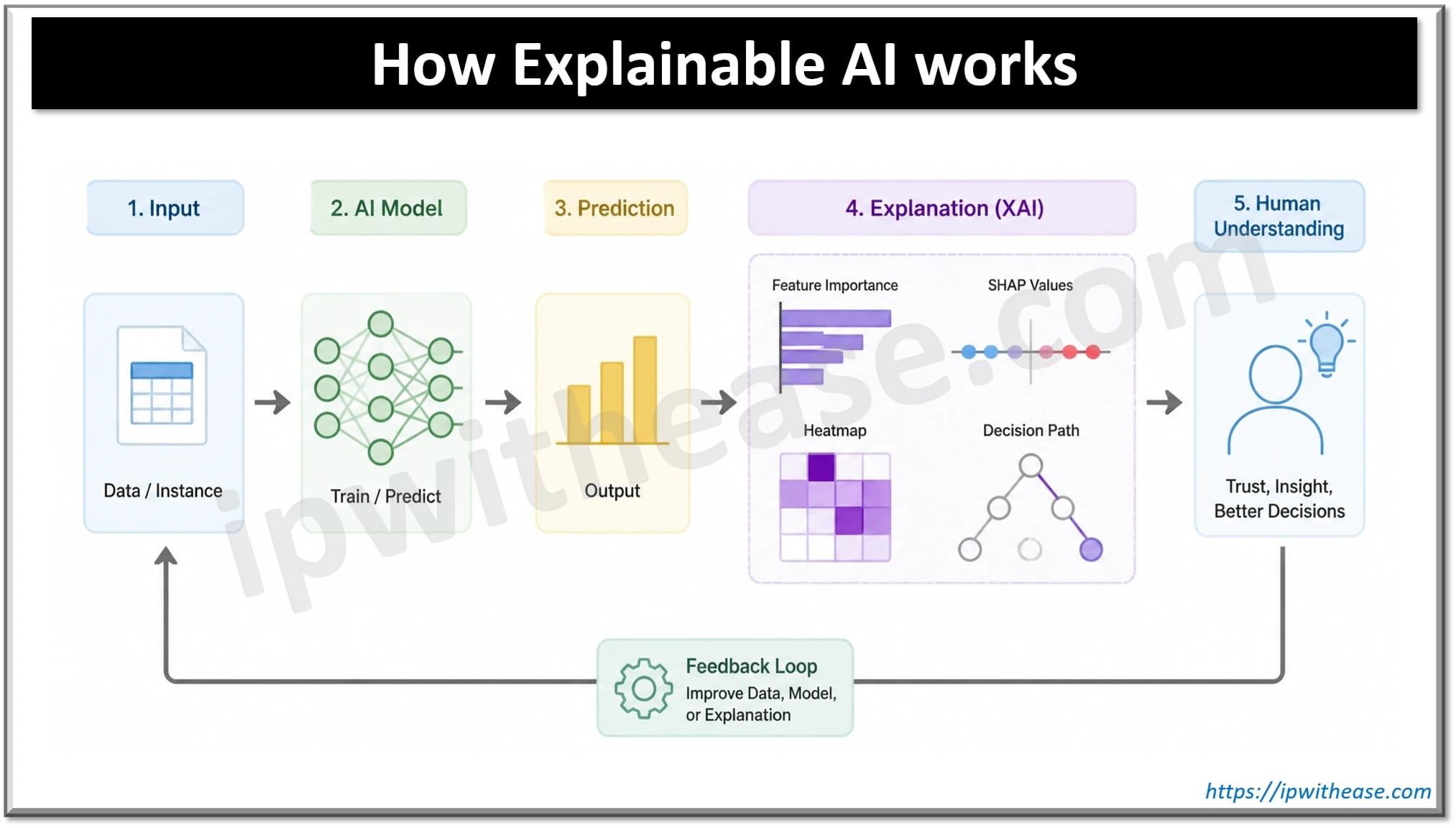
Explainable AI (XAI) is the set of methods that make an AI model’s decisions understandable to people, showing which inputs drove a given output and why. It turns a “black box” prediction into something engineers, auditors and end users can inspect, question and trust.
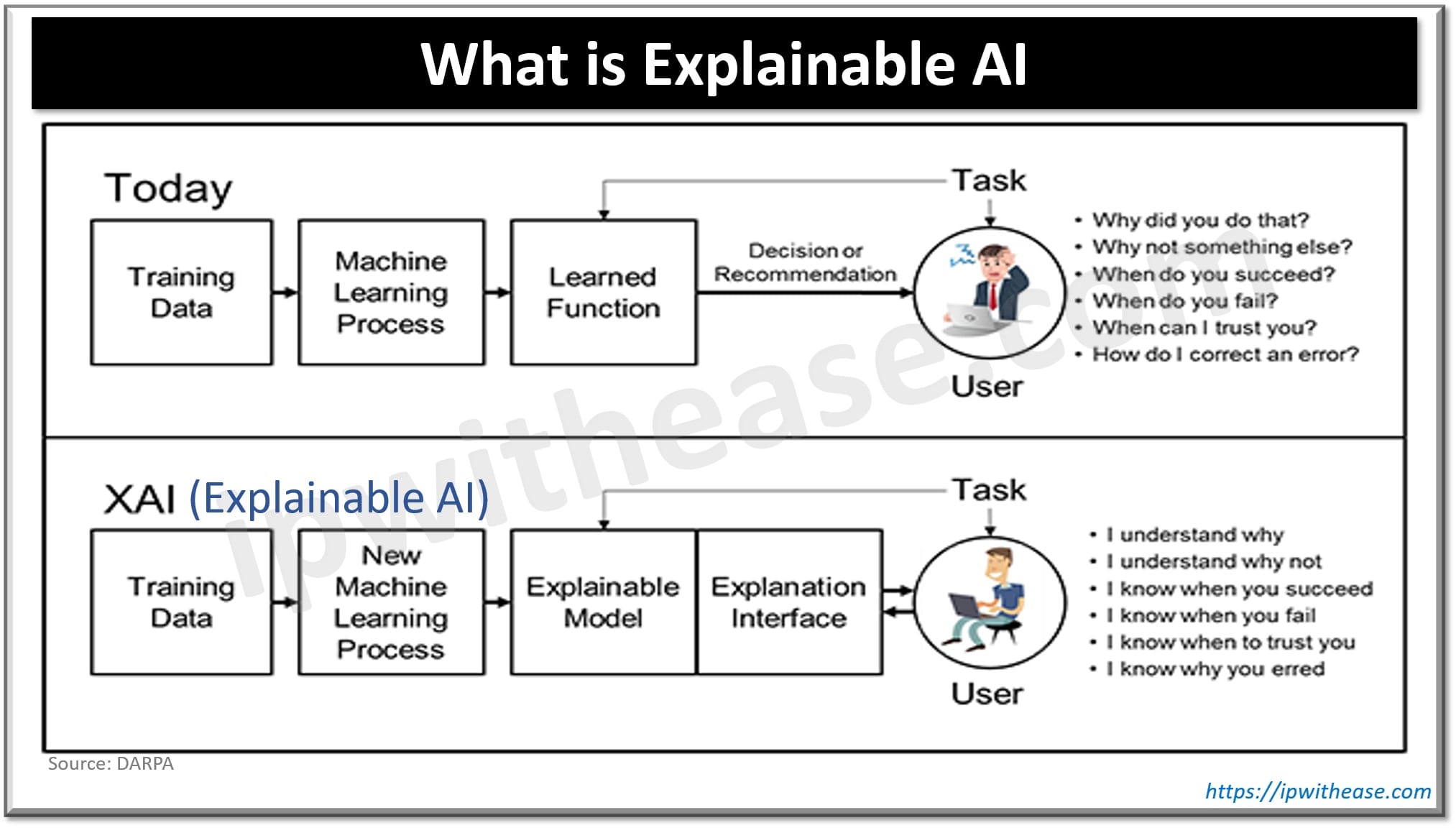
AI or Artificial intelligence is deeply penetrating into our lives. But dependence on AI also raises the question – if decisions made by algorithms are reliable and dependable. What would be the outcome of a specific AI algorithm? Why did it choose a specific outcome and did not consider the alternative choices?
This raises the question of explainability and transparency in AI decision making and outcome in deep learning neural networks. The lack of explainability and transparency in AI decision making will make adoption of AI more difficult as who needs a computer system that does not describe how a specific outcome is achieved and maintain transparency.
In today’s article we will learn about explainable AI, explainable AI use cases, principles of AI explainability, explainability in AI.
What is Explainable AI
Explainable AI (XAI) provides methods to understand how AI models work internally and addresses issues related to lack of transparency in AI based automated decisions. Explainable AI (XAI) laid down the foundation for observable and trustworthy AI integrations. The organizations keen to adopt AI also need to align ethically and maintain operational standards. Human and training data is used in many AI algorithms for the purpose of deep learning for pattern recognition. Deep learning is a neural network simulation technique like the human brain but how decisions are made by deep learning algorithms are not transparent.
Explainable AI comprises methods to assess accuracy of AI models, fairness, transparency and final outcome obtained using AI power. There are often challenges faced by humans to trace back steps taken by AI algorithms to reach a specific decision.
Explainable AI Use Cases
- Hiring and Financial services – Credit scores and loan approvals assistance can be done by AI but it requires careful assessment so no physical harm comes to humans. Regulatory bodies leverage the explainable AI to meet the compliance requirements.
- Healthcare – Critical disease diagnosis such as cancer it is important for doctors to understand the basis on which diagnosis is made by AI algorithm. A level of explainability is required for radiologists and oncologists who are involved in managing or analysing health statistics of humans. Any new drug discovery in its clinical trial may require deep understanding on how an AI model identifies candidates for trials to have targeted trials for better chances of success.
- Automobile Industry – Autonomous vehicle decision making may require careful evaluation of actions taken by AI algorithms as human lives are involved here.
Principles of Explainable AI
NIST, the National Institute of Standards, USA had defined four principles for explainable AI.
- Each output of AI system should have reasoning for every output with evidence
- AI system output should be explainable to its users
- It should accurately outline the process used to achieve the desired output as part of explainability.
- The AI system should function in its limit and in the event of lack of confidence in decision should not provide the output.
Importance of Explainability in AI
There are five reasons due to which explainability in AI systems automated decision making becomes critical as under:
- Accountability – Incorrect or unexpected decisions can be made by AI systems and it is crucial to understand what factors are required to be considered to avoid such pitfalls in future. With an explainable AI root cause of failure and unexpected decisions can be identified and responsibility can be assigned appropriately.
- Trust – Working of AI models comprehensive understanding is required by stakeholders in high risk domains such as finance and healthcare. Explainable AI helps to build trust among domain experts and end users by providing transparency in how a specific decision is made using AI.
- Compliance – Compliance to various regulations such as HIPAA, AI EU Act, GDPR mandate disclosure about automated decision making process. Explainable AI meets the regulatory requirements with clear insight into decision making, process and steps taken to achieve a decision.
- Performance – When there is a good understanding of how AI models work then data scientists can identify areas of improvement, and can tweak key parameters to fine-tune and optimize models.
- Enhanced Control – Transparency into the decision making process of AI models disclose potential vulnerabilities which were not identified earlier. Gaining insights into undisclosed or not identified earlier vulnerabilities help organizations in securing and addressing high risk situations or use cases effectively and offers better control over AI use.
ABOUT THE AUTHOR

You can learn more about her on her linkedin profile – Rashmi Bhardwaj