Table of Contents
Amazon Cloud Services (AWS) will continue to be the primary provider of cloud technical resources to companies globally in 2026. For companies ranging from startups to Fortune 500 organisations, AWS provides the supporting technology for applications, data systems, analytics, and AI across all market verticals.
AWS provides cloud services to companies in every industry, every segment, and every data tier. Obtaining AWS certification provides technical professionals in the areas of cloud, data, DevOps, and software engineering and Bonn additional help to their career and employment opportunities.
This guide will provide you with everything available for AWS certifications so you can isolate the certifications you need to obtain your desired cloud computing certification and align with your career.
Why AWS Certifications Are Important in 2026
The cloud computing skills required for 2026 will be provided by commercially available cloud service providers like AWS. Understanding how to utilize commercially available cloud services (i.e. AWS) is important even if your role is not specifically within the cloud computing vertical.
Having an AWS certification will help you
- Achieve an enhanced level of technical cloud computing skills
- Differentiate yourself from others in the job market
- Attain cloud and data related employment
- Enhance your understanding of related engineering fields
- Establish your AWS skills to engineering recruiters
AWS certifications are better than other certifications in that they are industry recognition for the graduate.
Understanding Different Levels of AWS Certifications
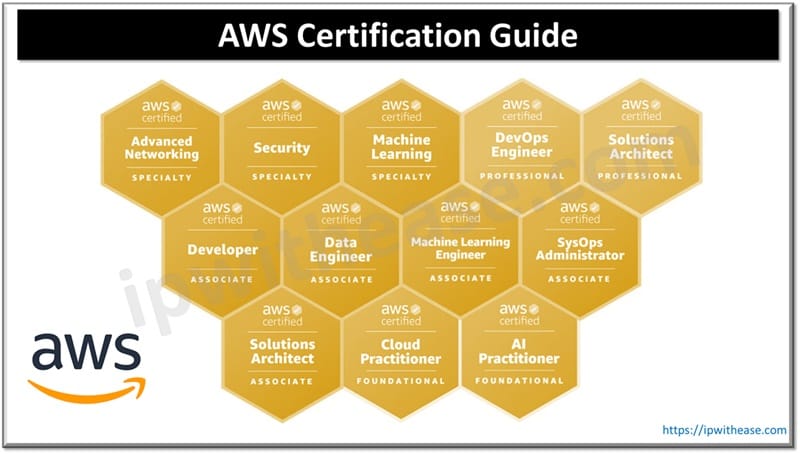
Learners can choose from four different levels of AWS certifications, each one focusing on a different level of knowledge from the basic fundamentals all the way to advanced specialization.
1. Foundational Level
Designed for:
- Cloud computing newcomers
- Students, and those without technical experience
- Business stakeholders collaborating with cloud teams.
Topics include:
- Fundamentals of cloud computing
- Fundamentals of AWS services
- Basic concepts of billing, security, and architecture
This is the best level for absolutely anyone looking to get started on cloud computing certifications, providing a broad overview of AWS.
2. Associate Level
Designed for:
- Professionals with basic knowledge of AWS
- Developers, system administrators, and engineers
- Individuals preparing for cloud roles
Topics include:
- Designing and implementing AWS solutions
- Working with compute, storage, and networking services
- Cloud security and monitoring
- Troubleshooting common issues in the cloud
These certifications are most commonly awarded to professionals, and it is projected that the trend will continue toward AWS certifications in 2026.
3. Professional Level
Designed for:
- Senior-level cloud professionals
- Senior architects and engineers
- Individuals developing intricate, scalable solutions
Topics include:
- Architectural design at advanced levels
- Enterprise-scale solutions and multiple accounts
- Cloud solution security, cost optimisation, and reliability
- Hybrid cloud strategies and migration
These certifications are often required for the most senior positions in cloud solutions as they demonstrate deep levels of expertise.
4. Specialty Certifications
Who it’s for:
- Professionals in a specific area
- Advanced level security, data, or machine learning practitioners
What it covers:
- In-depth technical know how
- Real-world application
- Problem solving
- Advanced integration of services
In the year 2026, a speciality certification is an invaluable addition to a cloud professional’s portfolio.
AWS Certification Exams in Demand in 2026
Although AWS has a variety of certifications, some are more in demand in the current labour market.
Foundational Exam
- Cloud and AWS Basics
Associate Exams
- AWS Application Development
- Cloud Solutions and Architecture
- Systems Operations and Administration
Professional Exams
- Architecture of Advanced Cloud Solutions
- Design of Enterprise-Level Solutions
Specialty Exams
- Big Data and Data Analytics
- Security and Compliance
- Machine Learning and AI
- Advanced Networking and Infrastructure
Based on your level of expertise and professional aspirations, it is important to select the appropriate exam.
Structure and Format of AWS Exams
A standard format is followed in the majority of AWS certification exams.
The exam format includes:
- Multiple-choice as well as multiple-response-type question
- Scenarios that require problem-solving
- Real world architecture and troubleshooting scenarios
Length:
- Level determines exam duration. Usually between 130 and 180 minutes
Passing Criteria:
- 70% and above is considered a pass
AWS exams emphasize practical application rather than rote memorization.
To pass an exam, AWS tests your ability to apply the concepts rather than just the theories.
Exam Fee Structure (Approximate)
In 2026, it is important to plan your certification journeys considering the pricing of the examinations.
- Foundational Level: Lower Cost, Beginner-friendly
- Associate Level: Moderate Cost
- Professional and Speciality Level: Higher Cost
Pricing varies by region, but certification with AWS is cheaper than most degrees and expensive training programs.
Other costs may include:
- Practice exams
- Training (online, instructor-led, and self-paced)
- Study materials and labs
Use self-paced training and free AWS resources to save costs: most learners do this.
How to Prepare for AWS Certification in 2026
Step 1: Build Your Cloud Fundamentals
Focus on:
- What cloud computing is
- Core AWS services and their use cases
- Basic security and pricing
Learn these fundamentals in entry-level cloud computing certification courses.
Step 2: Choose the Right Learning Path
Pick courses for your specific role:
- System designers: Architecture-focused courses
- Programmers: Development-focused courses
- Admins and engineers: Operations-focused courses
Step 3: Practice, Practice (Critical Step)
In 2026, hands-on practice is non-negotiable. You should be able to:
- Create and manage resources on AWS
- Deploy applications
- Work with and adjust storage, networking, and security.
- Troubleshoot issues
Certifications from AWS reflect your practical experience, rather than your theory.
Step 4: Take Practice Exams
Taking Practice Exams enables you to:
- Get familiar with the exam structure
- Pinpoint your weak spots.
- Cultivate exam confidence and improve your timing.
Career Opportunities with AWS Certification
AWS Certification will lead to new career horizons.
The range of professions you can qualify for after obtaining an AWS credential is extensive.
Jobs for Less Experience
- Cloud Support Engineer
- Systems Administrator
- Junior Cloud Engineer
- DevOps Associate
Data & Analytics Roles
- Cloud Data Engineer
- Analytics Engineer
- Big Data Engineer
- Platform Engineer
Jobs for More Experience
- Cloud Architect
- Solutions Architect
- DevOps Engineer
- Cloud Security Engineer
Having AWS credentials allows professionals to gain access to new and interesting jobs.
Salary and Position Increase with an AWS Certification: 2026
The average salary of Cloud professionals with an AWS certification is expected to increase.
- Zones and jobs where the AWS credentials are most prevalent see salary increases
- Cloud engineers and architects are among the cloud professionals with the highest average salaries.
- Careers in data and artificial intelligence that also require AWS credentials are projected to be in high demand
- An AWS certification increases your salary, especially when paired with hands-on experience
Comparing AWS Certification with Other Cloud Provider Certifications
The majority of professionals choose AWS, the most common cloud provider, however, many professionals choose to compare AWS with other cloud providers.
Benefits of AWS
- Largest global market share
- Comprehensive portfolio of services
- High demand across sectors
When AWS fits your objectives
- You want maximum career prospects
- You want to partner with startups or large tech companies.
- You want to establish yourself in cloud or data engineering for the long haul.
That being said, it is not unusual for cloud computing practitioners to add a number of different cloud computing certification courses as they progress in their careers.
Common Mistakes to Avoid
- Researching without accompanying hands-on work
- Attempting advanced exams too soon
- Rote learning answers without comprehension of the underlying principles
- Avoiding architecture and cost optimization subjects
- Choosing certifications that do not align with your career objectives
Avoiding these mistakes improves your likelihood of success.
Who Should Pursue AWS Certification in 2026?
You should pursue AWS certification if you:
- Are a student looking to get into tech roles
- Are a professional working in a cloud role looking to transition
- Are a developer or data professional looking to enhance your skills
- Are an engineer targeting senior or architect roles
If you are currently enrolled in analytics, data science, or engineering programs, these certifications will greatly benefit you.
Final Thoughts
In 2026, AWS certifications will continue to be a vital credential in the tech world. AWS certifications are unique in that they provide a clear pathway from foundational certifications to advanced and specialty certifications. They also provide a wide variety of options for both beginner and experienced professionals.
Taking AWS certification with suitable exams, guiding your knowledge to meet ambitions, and investing in practical skills can open prospects in cloud, data, analytics, AI, and DevOps. Coupled with aligned cloud computing certification courses, it offers a sound basis for sustained career advancement.
If you would like, you can tell me your present position, how long you’ve been working, and what you intend to achieve, and I can propose an AWS certification roadmap for 2026 tailored to your circumstances.
ABOUT THE AUTHOR

IPwithease is aimed at sharing knowledge across varied domains like Network, Security, Virtualization, Software, Wireless, etc.