Table of Contents
A login form receives two kinds of hostile traffic that look alike in the logs. Both send username and password pairs to an authentication endpoint, both are automated, and both end with an attacker holding an account that belongs to someone else. The two attacks differ in where the passwords come from, and that determines which defences stop each one.
What is Credential Stuffing?
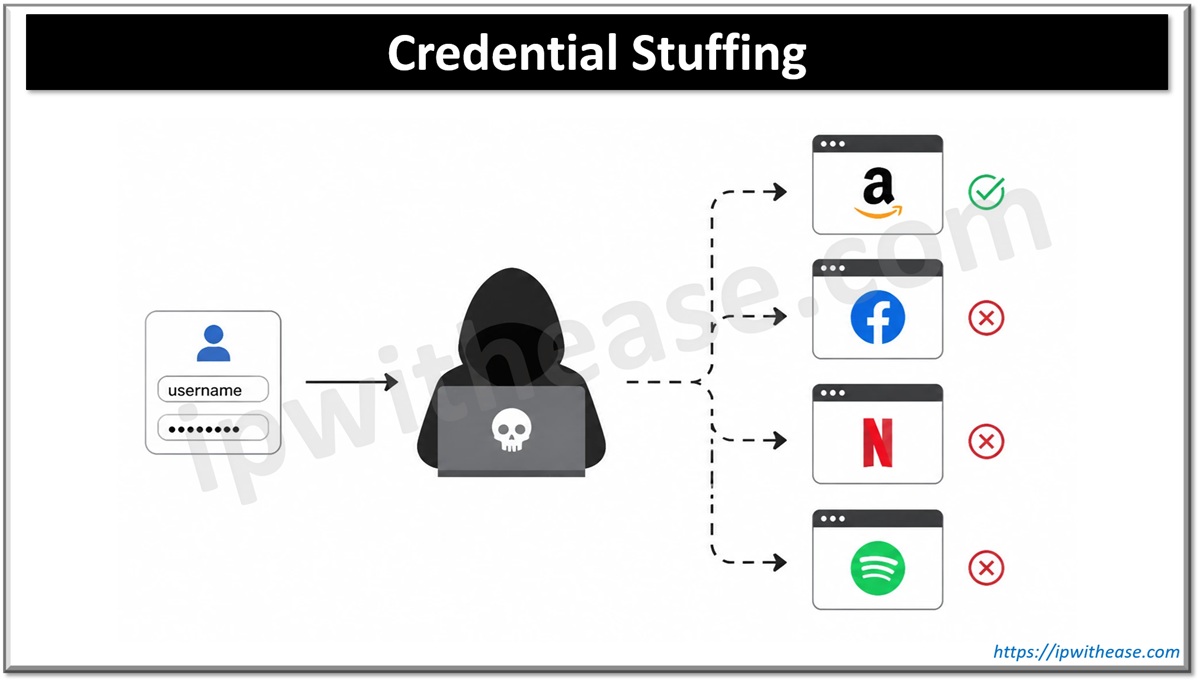
Credential stuffing takes username and password pairs leaked in a breach of one service and tries them on another. The pairs were valid somewhere else, and the attack relies on people reusing the same email address and password across shopping sites, streaming services and work accounts.
The lists come from breach dumps traded or published after earlier compromises. A tool loads the list, rotates through proxy addresses and submits each pair once. Most pairs fail, because the person never registered on the target site or chose a different password there. The ones that succeed open real accounts with real owners, through a login request that is indistinguishable from a normal sign-in.
What is a Brute Force Attack?
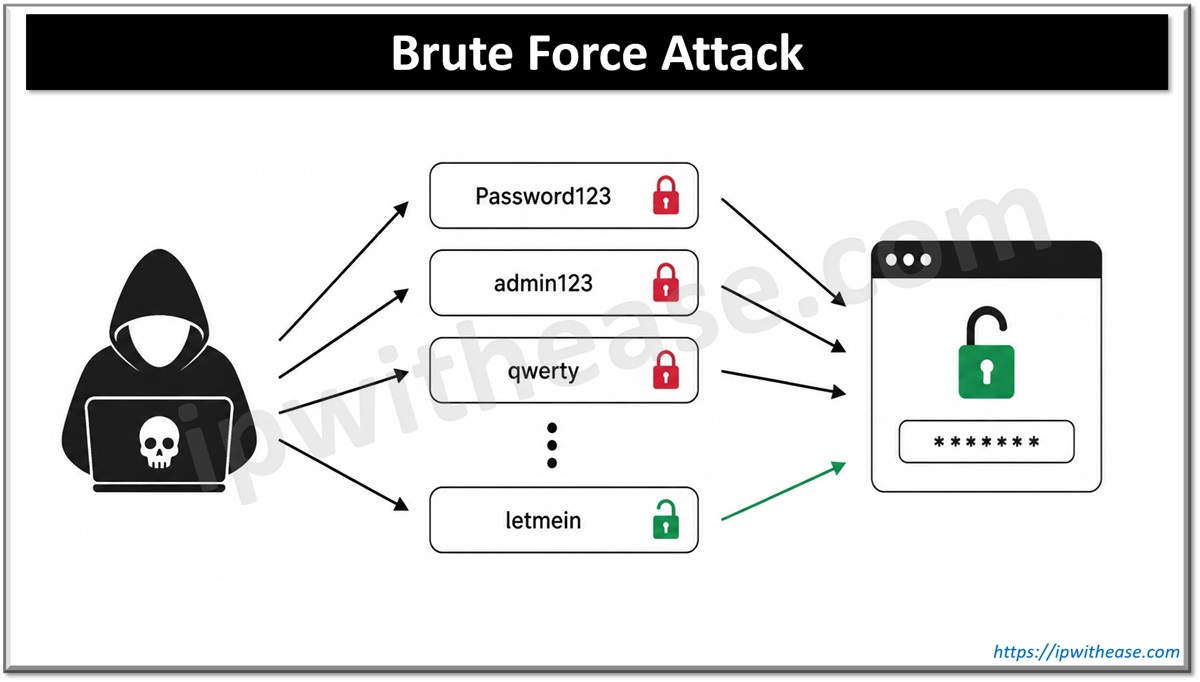
A brute force attack produces the passwords itself. The attacker picks a target account, or a list of usernames, and submits candidates until one is accepted: every combination within a character set, a dictionary of common passwords, or variations on a word with a year and a symbol added. Password spraying reverses the approach. It tries one common password against many accounts, so no single account reaches its lockout threshold.
MITRE ATT&CK files all of these, credential stuffing included, under a single technique, T1110 Brute Force, with password guessing, password cracking, password spraying and credential stuffing as its four sub-techniques. The grouping makes sense for an attacker, since each one is a series of login attempts, but a defender needs a different control for each.
Credential Stuffing vs Brute Force: A side-by-side Comparison
| Criterion | Credential Stuffing | Brute Force |
|---|---|---|
| Method | Replays username and password pairs leaked from other services | Generates password candidates: exhaustive, dictionary-based or pattern variations |
| Attempts per account | Usually one | Many on a classic attack, one or two per account on password spraying |
| Speed | Fast across the whole list, since each pair is tried once and requests are spread over many IP addresses | Slow against an online login with throttling, fast only offline against stolen password hashes |
| Detection difficulty | High: each request is a well-formed login with a plausible password, sent from rotating residential or hosting addresses | Lower: repeated failures on one account or from one source trigger lockout and alerting rules |
| Success rate | Low per attempt, but every hit is a valid account and long lists turn a small share into many accounts | Very low against long, unique passwords, high against short or common ones |
| Weakness exploited | Password reuse across services | Short, common or predictable passwords |
Download the comparison table: Credential Stuffing vs Brute Force
Detection is where the two attacks differ most. A brute force run against one account leaves a trail that any lockout policy can read. A credential stuffing campaign spreads its attempts so widely that per-account and per-IP counters never reach an alert or lockout threshold.
How both Attacks end in Account Takeover?
Once a login succeeds, the two attacks converge. The attacker now has an authenticated session on a real account, which the application treats as legitimate because the password was correct. What happens next is the same in both cases: contact details are changed so that password reset emails go elsewhere, then stored payment methods or loyalty balances are spent.
Picture the on-call engineer opening the authentication dashboard on a Monday morning. Failed logins are up, yet every account shows at most two failures and every IP address has sent only a handful of requests. The lockout policy never fired. A few days later the support queue fills with customers asking why their email address changed.
Defence Measures: MFA, Rate Limiting and Bot Detection
Multi-factor authentication (MFA) holds against both attacks, since the login also requires a second factor. One-time codes raise the cost of an attack considerably, and phishing-resistant factors such as passkeys raise it further.
Rate limiting and lockout deal with brute force well. NIST SP 800-63B caps consecutive failed attempts on a single account at 100 before throttling must apply, and many services choose a much lower figure. Against credential stuffing, the same control has almost nothing to count: each account gets a single attempt, and the requests come from thousands of different IP addresses.
Because the credentials are valid pairs leaked in earlier breaches, blocking credential stuffing means inspecting the client that sends the request as well as the password. ATO protection software analyses device signals, behaviour and request patterns in real time, so that automated logins can be separated from genuine users even when the password submitted is correct.
Bot detection relies on the same family of signals at the network edge. The OWASP Credential Stuffing Prevention Cheat Sheet points out that stuffing toolkits ship with proxy networks built in, which is why per-IP limits fail, and recommends correlating traffic with IP intelligence, hosting provider ranges included. It also warns that a device fingerprint is supplied by the client and can be spoofed, so it works best as one signal among several.
Password policy still matters, on a narrower front. NIST SP 800-63B requires new passwords to be checked against a blocklist of common and compromised values, which removes the easiest candidates from a brute force dictionary and refuses passwords already circulating in breach dumps.
Which Attack to Plan for First
Credential stuffing is most effective against public login pages with large user bases. In a dump of millions of credential pairs, even a small share of reused passwords gives the attacker working accounts. Brute force pays where a single account justifies a sustained effort, such as exposed admin panels, SSH and RDP services or VPN gateways. On these interfaces, the classic brute force tools and mitigations apply directly, and MFA against password spraying also blocks the slower, distributed variant.
ABOUT THE AUTHOR

IPwithease is aimed at sharing knowledge across varied domains like Network, Security, Virtualization, Software, Wireless, etc.