Table of Contents
In today’s highly interconnected digital world, obtaining a stable, reliable, and anonymous internet connection is crucial for both businesses and individual users. Among the many proxy solutions, static ISP proxies are gradually becoming the preferred choice for tasks that require a balance of performance, reliability, and authenticity. In this article, we will delve into the core features of static ISP proxies, and conduct a detailed comparison with residential proxies and data center proxies, as well as share best application strategies from industry practices, with the aim of helping you make informed decisions when selecting ISP proxies.
Overview of Static ISP Proxies
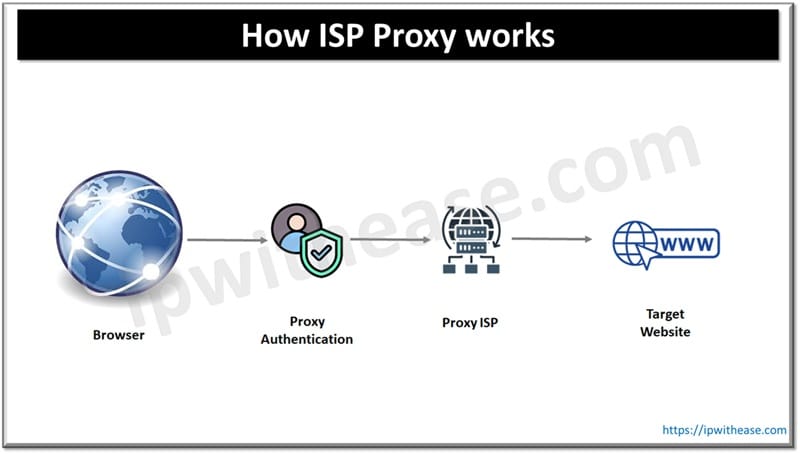
Static ISP proxies are essentially residential IP addresses assigned and maintained long-term by Internet Service Providers (ISPs), which cleverly combines the stable speed of data center proxies with the high authenticity of residential proxies. For users seeking a stable identity, evading anti-bot mechanisms, and conducting long-term online operations, this type of proxy offers unique value.
- The IP address is directly assigned by a real Internet Service Provider, consistent with ordinary residential users.
- Once assigned, the IP address remains unchanged for weeks, months, or even longer rental periods.
- Although the IP is of residential type, the servers are typically hosted in professional data centers, ensuring high speed and stable connections.
- High-quality ISP proxy providers usually have legitimate cooperative relationships with ISP operators, ensuring compliance and sustainability of the service.
Related: Forward Proxy vs Reverse Proxy
Key Features of Static ISP Proxy
The reason static ISP proxies are favored in professional fields is that they integrate multiple key advantages, which directly address the major challenges in the modern online environment. Their core value lies in achieving an exceptional balance between authenticity and stability, providing a solid foundation for businesses that require a persistent and reliable online identity.
- Ultra High Trust Level and Low Block Rate: Since the IP originates from a real ISP and is labeled as a residential network, the risk of being banned by target websites and platforms is much lower than that of data center proxies.
- Exceptional Connection Stability and Speed: Thanks to data center-level server hardware and network bandwidth, it overcomes the speed fluctuation issues that may occur with traditional dynamic residential proxies, offering fast and stable connections comparable to those of data center proxies.
- Long-Term Stable Online Identity: A fixed IP address allows users to maintain a persistent digital identity, which is crucial for tasks that require long-term logins, account management, or maintaining session continuity.
- Robust Geolocation Capabilities: Users can choose IPs from specific cities, regions, or even carriers, achieving precise geolocated access, which is extremely useful for localized content testing and market research.
- Ease of Integration and Management: Compared to dynamic proxy pools, fixed IP addresses simplify the configuration and maintenance processes, making it easier to integrate into automation scripts and existing systems.
Static ISP Proxies vs Residential Proxies vs Data Center Proxies
Choosing the right type of proxy depends on the specific use case and requirements, here are the detailed differences between static ISP proxies and other types of proxies:
| Parameter | Static ISP Proxies | Residential Proxies | Data center Proxies |
|---|---|---|---|
| IP Source | Residential IP assigned by real ISP | Residential IP assigned by household devices | Virtual IP from data center facilities |
| IP Stability | Very high (long-term fixed) | Low (changed per request or periodically) | High (long-term fixed) |
| Connection Speed | Very high | Generally medium | Extremely high |
| Anonymity & Trust Level | Extremely high | Extremely high | Low |
| Advantages | Stable Reliable Fast | Very high anonymity Large IP pool | Very fast Cost-effective |
| Disadvantages | Higher cost than data center proxies | Unstable speed IP status uncontrollable | Easily blocked by target websites |
| Pricing | Moderately high | Flexible (based on traffic) | Lowest |
| Use Cases | Social media management Long term crawling Ad verification | Large scale data collection Price monitoring | High speed requests Non-sensitive tasks Situations with less strict IP restrictions |
Best Practices for Static ISP Proxies
After understanding the unique advantages of static ISP proxies, it is key to maximize their value in specific applications. We recommend deploying static residential proxies in the following scenarios that have high demands for both stability and authenticity, to ensure task success rates and operational efficiency.
Use Case 1: Social Media Account Management and Marketing
In multi-account operations or community management, maintaining account health is the primary task. Static ISP proxies provide a fixed and authentic “home network” environment for each account.
- Account Security: Fixed IP logins reduce the platform’s suspicion of unusual logins, significantly decreasing the risk of account bans.
- Automated Posting: When using automation tools for content posting and interaction, stable IPs ensure that task flows are not interrupted.
- Data Analysis: Using a fixed identity to observe and collect data on specific communities or topics over the long term ensures data continuity.
Use Case 2: Complex and Long-Term Web Scraping and Data Aggregation
When the target website has strict anti-scraping mechanisms and the data collection period is long, static ISP proxies are the ideal solution.
- Bypassing Anti-Scraping: The real residential IP characteristics can effectively bypass primary anti-bot systems based on IP reputation.
- Maintaining Sessions: For websites that require maintaining login status or cookie sessions to access, a fixed IP is crucial.
- Incremental Scraping: When performing regular, incremental data updates on a website, using the same IP is friendlier and more discreet.
Use Case 3: Ad Verification and Competitor Intelligence Monitoring
Verifying ad effectiveness and monitoring competitors’ online activities require highly realistic user perspectives.
- Geolocation Checks: Using a residential ISP proxy from specific regions to see the ad content and rankings that users in that area see.
- Long-Term Monitoring: A fixed IP can simulate local loyal users, continuously monitoring changes in competitors’ marketing strategies.
- Avoiding Detection: When checking your own ad placements, using proxies can prevent being flagged by ad platforms due to frequent access from company IPs.
Key Points for Choosing Static ISP Proxy Providers
Faced with numerous ISP proxies for sale websites in the market, making the right choice requires careful evaluation of several core factors.
- Vendor Reputation and Legitimacy: Choose vendors with high transparency and clearly legitimate IP sources as a priority, as this directly affects the stability of the proxy network and the compliance risks of use.
- IP Purity and Subnet Size: Ask whether the IPs have been heavily abused, and ensure that the provided IPs come from different C-class subnets, to avoid mass bans due to association.
- Network Coverage and Location Accuracy: Choose providers that can offer IPs for target areas, or even specific cities or carriers, based on business needs.
- Connection Speed and Uptime: Request speed tests or free trial ISPs, to personally verify whether latency, bandwidth, and connection stability meet your needs.
- Authentication Method and Security: Check the supported authentication methods (such as username/password or IP whitelisting) and whether data transmission is encrypted to ensure business security.
- Customer Support and Pricing Flexibility: A high-quality ISP proxies provider should offer timely technical support, and provide clear and flexible pricing plans, to avoid hidden fees.
Conclusion
In summary, static ISP proxies, as a hybrid solution, successfully fill a market gap by combining the trustworthiness of real residential IPs with the reliability of data center infrastructure. It is particularly suitable for those who cannot afford the high block rates of data center proxies, and are limited by the instability of dynamic residential proxies in professional application scenarios.
When you decide to buy isp proxy, you should not focus solely on finding cheap ISP proxies, but should pay more attention to the quality of the IPs, the reputation of the provider, and how well they match your business needs.
By thoroughly understanding their characteristics, wisely choosing providers, and following industry best practices, whether running an isp proxy server or managing large-scale online operations, static ISP proxies can become a powerful and reliable tool in your hands, helping you navigate through the complexities of the digital environment with confidence.
ABOUT THE AUTHOR

IPwithease is aimed at sharing knowledge across varied domains like Network, Security, Virtualization, Software, Wireless, etc.