Table of Contents
LangGraph and traditional automation scripts are two popular choices here which cater to different needs from balancing flexibility, to ease of use and specialization to ensure real-world applicability.
LangGraph is a graphic based workflow where tasks are treated as interconnected nodes and well suited for systems which require advanced memory, error recovery and extensive auditing capabilities.
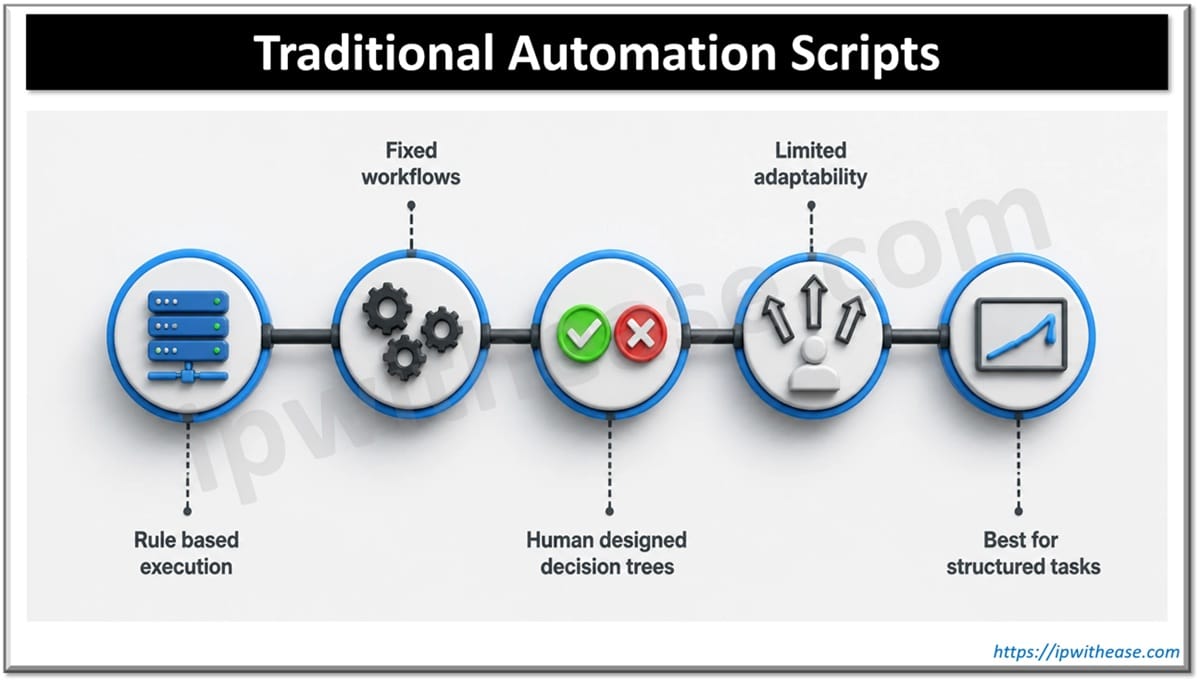
Traditional automation scripts execute a series of pre-determined instructions based on a fixed set of rules. No reasoning or thinking is involved here to understand the problem and determine the next course of action.
AI agents are bringing transformation across industries by automation of complex workflows, code generation and customer handling or support. The choice of the right framework is however crucial to build the agents which can actually convert profit numbers and bring operational efficiencies on floor.
In today’s article we will cover in detail the difference between the LangGraph framework for building AI agents based automation and traditional automation scripts, their advantages, limitations and use cases.
What is a LangGraph
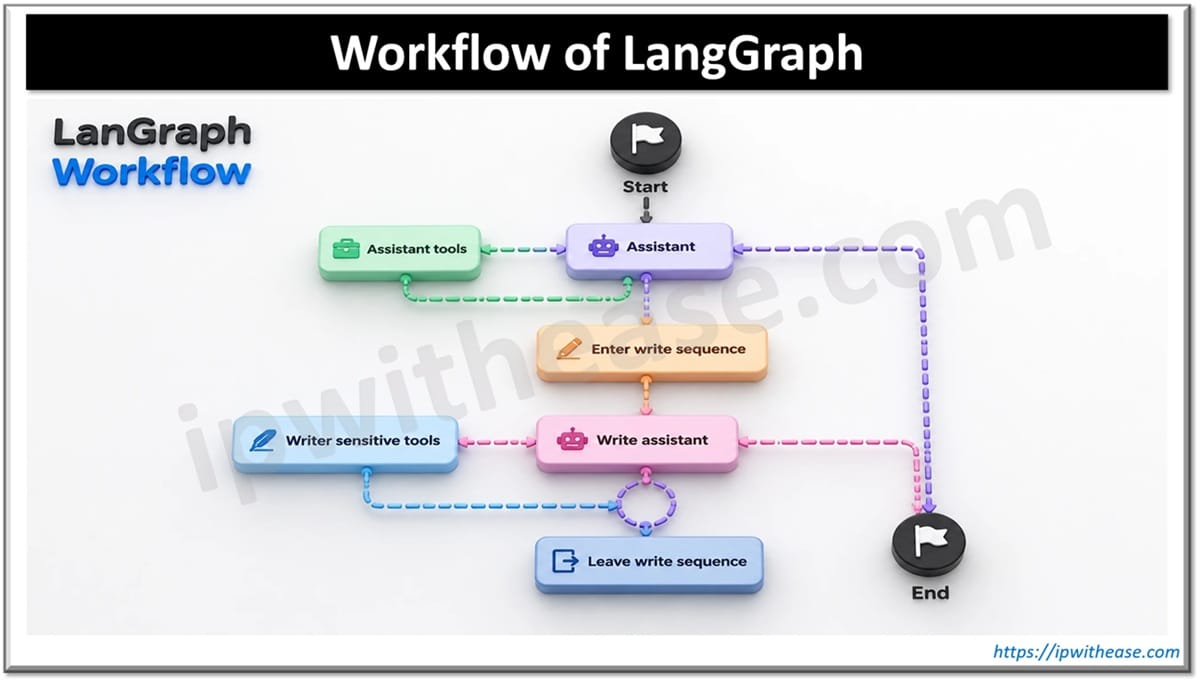
LangGraph is built by the LangChain team. It is an orchestration based on open-source python and JavaScript. It is designed and built to manage AI agent workflows with graph based structures. Developers can define workflows in LangGraph. There are three main core components of LangGraph- nodes, state and edge.
- State stores application current state snapshot which includes the information on structure of graph and reducer function to apply updates on graph.
- Node functions define what actions agents will do. Based on the current state as input actions are performed and output is returned as an updated state.
- Edge function defines which node will run based on the current state it could be – fixed or dynamic, conditions based.
In simple words, Nodes tell what is to be done and edges tell what is to be done next.
Advantages of LangGraph
- LangGraph keeps memory of what happened using two types of memory – short term which stores single interaction information managed by state and checkpointer. Long term which stores information on multiple interactions and is managed by Store.
- It can travel back in time and can analyse decisions taken by AI agents using forking and replaying techniques
- Human interactions are required on critical steps
- It supports partial updates streaming
- It let agents run parallel tasks
What are Traditional Automation Scripts
Deterministic in nature every step is pre-defined, every branch and conditions are outlined. Sequential in nature just like flowchart – predictable, powerful and low running costs but unfortunately real-world problems are not that straightforward and not always follow the flowchart. Traditional automations are similar to an assembly line where each action is pre-defined and rule-based without any exceptions or deviations. The traditional automation scripts are usually written in Java, bash or Python language.
Advantages of Automation scripts
- Best to handle repetitive tasks so people can be free to do strategic tasks
- Reduction in chances of human errors often occurred when manually performed due to the very nature of tasks
- Gives consistent and deterministic results almost every time
- Lightweight code executions as compared to AI agent based automations
- More control, visibility and transparency in code logic and execution
LangGraph vs Traditional Automation Scripts
| Features | LangGraph | Traditional Automation Scripts |
|---|---|---|
| Decision making | LangGraph is built to handle non-deterministic behavior of LLMs | Rule based decision making. Conditions and actions are predefined and outcome is deterministic. |
| Flexibility | Highly flexible provides capability to design customized orchestrations patterns | Limited flexibility. Instruction based so workflows operate as programmed. |
| Tasks complexity | Steep learning curve and distinct architectural overhead | Works best for simple, repetitive, and predictable outcome tasks. |
| Learning capabilities | It learns from its previous experience which is managed via ‘state’ | NIL. No learning |
| Workflow structure | Workflow structure is modelled as a state graph. Data flows through predefined paths and Application logic is treated as a network of data processing stations. | Predefined workflow structure where same path is followed every time |
| Human in loop | Human in loop involvement at every critical step and actions with built-in native capability of ‘Pause & resume’ | Full intervention of humans is required as such to fix any exceptions thrown, unexpected outputs, conflict in rules and missing data |
Download the comparison table: LangGraph vs traditional automation scripts
Final Words
LangGraph and traditional automation scripts solve different problems: scripts excel at fixed, predictable workflows where speed, cost, and determinism matter, while LangGraph is built for tasks that need reasoning, adaptability, and multi-step decision-making. Rather than one replacing the other, they complement each other.
Scripts handle the repetitive plumbing, LangGraph handles the judgment calls. The right choice comes down to whether your process is truly rule-based or genuinely needs an agent that can think through varying scenarios. For most real-world systems, a hybrid approach — automation scripts for the routine work, LangGraph for the complex decisioning — delivers the best balance of efficiency and intelligence.
Related Video
ABOUT THE AUTHOR

You can learn more about her on her linkedin profile – Rashmi Bhardwaj