Table of Contents
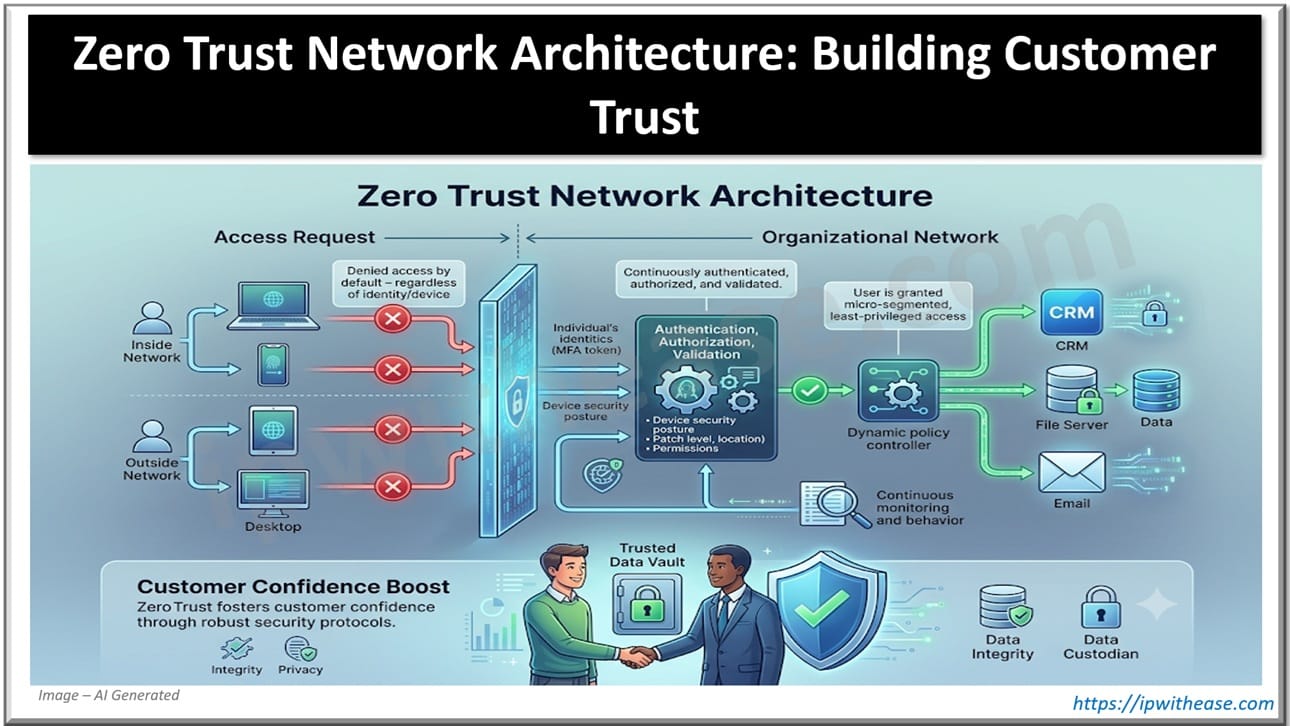
Zero Trust Architecture is a security framework requiring that all users are continuously authenticated, authorized, and validated. Whether a user is in or outside the organization’s network, they are never trusted by default. They are, in fact, denied access by default – regardless of their identity or device. The user is then monitored as they interact with the network.
For these reasons, Zero Trust can boost confidence among customers who appreciate that a business is implementing robust security protocols. As technology has progressed, fewer products are needed to implement Zero Trust, and more companies can operate and maintain it – a report by Cisco showed that 86% of survey respondents had begun implementing Zero Trust principles.
How Zero Trust help building Customer Trust
More Customer Sharing
A Forrester survey from 2023 showed that adults in the US, Spain, Italy, and Singapore were likely to share more personal data with companies they trusted. Zero Trust reduces the possibility of a malicious actor abusing customer data; likewise, it reduces the likelihood of well-intentioned employees or other users unintentionally abusing that data.
Forrester suggests that Zero Trust can also help companies when introducing new products: it requires new offerings to have stronger security features from the get-go. Many organizations use a pentesting platform to continuously test for vulnerabilities within a Zero Trust framework; Forbes has said that small businesses can’t afford to overlook pentesting.
Related: What is Zero Trust Architecture?
Breaches Undermine Trust
The same survey showed that many people would stop using a business’s products if they saw news about a data breach and exposed customer information. While Zero Trust can’t stop every possible breach, it does significantly decrease the frequency and scope of any impact. It emphasizes data protection and there is less danger of unencrypted data being hacked.
The tech writer Anders Ahl has pointed out that Zero Trust helps “demonstrate due diligence in safeguarding data” and supports compliance with data protection laws, which can help maintain customer trust. Companies who build trust with customers may be forgiven more easily in the unfortunate event of any breach, but it is wise to try to avoid breaches in the first place.
According to an IBM report, which called Zero Trust a “big win”, Zero Trust approaches significantly reduce the average cost of data breaches. Companies who were in a mature stage of implementation recorded a 42.3% difference in cost, or an average of USD 1.76 million, and the organizations that did not implement Zero Trust paid 19% more after breaches – an average of USD 5.04 million.
Takeaways
Digital ecosystems are growing more complex, and trust must be continuously demonstrated and earned. Zero Trust provides the framework for doing that, and data suggests that customers’ decisions are greatly impacted by data breaches. Any businesses who invest in avoiding breaches can reduce risk, boost trust, and keep personal information safer. In industries where a single breach can erode years of trust – and cost millions of dollars (Uber, for example, was fined $148 million for mishandling a cyber-attack) – adopting Zero Trust is a smart way to meet the expectations of security-conscious customers.
ABOUT THE AUTHOR

IPwithease is aimed at sharing knowledge across varied domains like Network, Security, Virtualization, Software, Wireless, etc.