Table of Contents
Vibe coding has propelled developer productivity into the stratosphere, making it possible to dream up new applications and build them entirely from scratch within a matter of minutes, using AI coding assistants. New features can be deployed at ungodly speeds, and some applications now receive multiple updates per day.
The pace of development has accelerated faster than anyone could have imagined just a couple of years ago, but there is one major downside to pumping out software as fast as it can be imagined. The problem is security. Because developers are now so focused on speed, the quality of the code they’re pushing out has become a lot more questionable.
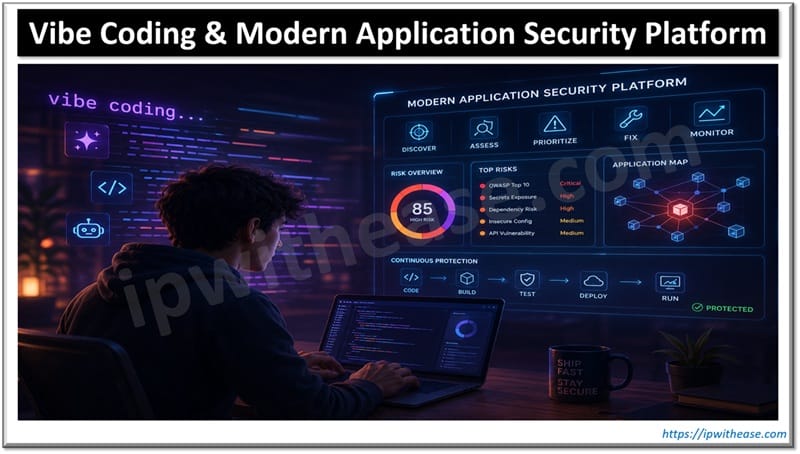
In fact, studies attest that AI-generated code is littered with vulnerabilities. But there’s no easy way to stem this flow. Developer velocity is everything, and if someone has to manually audit each line of AI-generated code, it will erase the massive productivity gains that vibe coding delivers.
To ensure that developer velocity can continue at the breakneck speed of vibe coding, software teams must automate the code audits too. By scanning, analyzing and repairing code with an application security platform built for today’s needs, it’s possible to put the pedal to the metal without compromising on security.
The Illusion of Functional AI Code
One of the major appeals of vibe coding is that agents like Claude Code, Cursor and Amazon Q consistently churn out functional software that works as it’s supposed to. Within minutes of ideation, it’s possible to generate a slick UI with fluid animations, working buttons and everything else an app might need. But appearances can be deceptive, and beautiful frontends can be riddled with security holes under the hood.
Aesthetics do not guarantee structural security, and there are plenty of reasons to be wary of AI-generated code. A recent study co-authored by researchers from Carnegie Mellon, Columbia University and John Hopkins University found that while the best vibing bots can solve 60% of coding tasks, more than 80% of the code they generate contained critical security vulnerabilities.
It’s not just bugs that developers need to be mindful of, though. Another study by GitGuardian found that Claude Code GitHub commits exposed hardcoded secrets more than twice as often as human commits.
This is a direct symptom of vibe coding’s velocity. Developers rarely write code themselves anymore, as their role has evolved to one of an agentic overseer, orchestrating dozens of autonomous agents that churn out software under their supervision. The volume of code is so enormous that it’s simply not possible to inspect everything manually using a standard application security platform.
Some of the most common bugs include hallucinated dependencies, where large language models invent non-existing software libraries and open-source packages. Worryingly, hackers are familiar with the phenomenon, and it has become common to search for these dependencies on Git repositories so they can register the packages on platforms like PyPI and npm and insert malware into them. If a vibe coder deploys that package later, they’re unwittingly inserting malware directly into their environment.
What’s more, AI-generated code is often plagued by misconfigured APIs and exposed endpoints, and can even include security credentials and cryptographic keys in plaintext format, leaving applications wide open for malicious individuals to exploit.
There’s also the danger of flaws being replicated again and again. While a human programmer can make a mistake once or twice, agents can output the same flaws repeatedly throughout an entire codebase. So instead of an SQL injection or cross-site scripting vulnerability appearing once, it can pop-up across hundreds of components, making it much more likely that someone will exploit it.
Traditional Application Security Platform Tools Can’t Cope
Traditional app security tools are too fragmented to keep up with the frenetic pace of vibe coding teams. Most organizations rely on a patchwork of tools, with one for static application security testing, another for managing software composition analysis and a third for API and dynamic testing.
It’s not nearly fast enough to keep up with the growing volumes of AI-generated code. In legacy DevOps pipelines, developers would carry out individual tests, one by one, before sifting through various dashboards looking at the results, ruling out false positives and fixing any real bugs that surface before every release.
Vibe coding teams need something much faster and more dynamic. When an autonomous agent can spin up an entirely new feature in under a minute, it’s not feasible to go running separate tests on the code, the dependencies and the API that might take 30 minutes to return a result, especially if they have to be done one at a time.
Velocity would grind to a halt, which is why many developers simply switch these legacy security tools off.
Consolidated, Automated Testing as the Cure
If code security is going to keep pace with autonomous agents, it needs to happen as swiftly as they work, and that means investing in an application security platform that bundles all of the tests and dependency scans into a single package. By consolidating SAST, SCA, API testing and container security into the vibe coding workflow, it’s possible to guarantee code integrity at the speed of AI.
When all of these capabilities sit under one roof, a modern application security platform can run multiple tests simultaneously and correlate its findings across different layers of the app. So instead of the developer seeing an alert for an open-source vulnerability and another for an exposed API, they’ll be able to look at a comprehensive report that stitches these vulnerabilities together.
The result is more incisive insights at a glance – the platform would instantly recognize a dangerous vulnerability that has been exposed through a publicly-accessible API endpoint. It would also know to escalate the issue as a critical priority.
In a modern AppSec platform, this correlation happens in real-time via actionable feedback loops. As AI agents churn out fresh code, the platform runs in the background, ingesting everything as fast as it’s produced. The resulting security insights can then be applied in real time, allowing teams to steer their agents back on course should they take a wrong turn.
What Does a Modern Application Security Platform Look Like?
Vulnerabilities must be weeded out the moment they appear, and that means embedding real-time safeguards directly into the integrated development environment. By scanning code syntax as it’s generated, structural flaws and unvalidated inputs can be flagged within seconds. The platform can then recommend an immediate one-click fix and apply it long before the code is committed.
Besides these in-context safety rails, modern application security platforms must also secure the software supply chain to prevent dependency hallucinations. This means vetting each open-source package against a live database of verified components to ensure nothing malicious gets pulled into the local environment.
Should a coding bot call an unverified or non-existent library, that action can be blocked instantly and an alert sent to the developer, stopping supply chain attacks before they’re inserted into the development pipeline.
Manual security reviews and governance processes have become obsolete in the vibe coding world. Now is the time for policy-as-code automation systems to shine by enforcing organizations’ compliance rules in real time. By defining these rules within the application security platform, they can block key vulnerabilities, ban specific licenses and enforce encryption standards as the code is being created. They provide a way to continuously monitor and evaluate AI outputs to ensure they meet the highest standards.
No Velocity Without Visibility
If software engineers want to thrive in the AI era, they’re going to have to embrace the vibe coding trend. Their role has evolved dramatically from what it was just a couple of years ago, and speed is of the essence, but it’s not the only concern. Teams must increase velocity without losing control, and that requires mastery of an application security platform that does it all.
The fragmented legacy testing processes of old can’t keep up, but releasing unvetted AI-generated code straight into the wild isn’t an option either. For vibe coding to pay off, automated visibility is the way to go. By integrating unified, real-time security directly into the vibe coding workflow, teams can generate new software at the speed of machines without risking it all.
ABOUT THE AUTHOR

IPwithease is aimed at sharing knowledge across varied domains like Network, Security, Virtualization, Software, Wireless, etc.