Table of Contents
Start strong by shaping your projects with smart methods plus a quick Microsoft Project setup. Build task plans that stick, handle people and time without hassle. Watch steps unfold in real time while teams stay on the same page. Success shows up when control meets clarity. Tools work better when they blend into the background. Focus stays sharp when effort flows naturally from one stage to the next.
Nowadays, work moves quickly. Getting things done well isn’t just nice – it’s necessary. Teams face a steady push to hit deadlines, stay on budget, and then do it again without big surprises. Because of that, some turn to get MS Project software so they can sort out assignments, hand out people where needed, keep an eye on what’s happening – all in a clear format. That need? It shaped how folks now lean hard into tech helpers, and right at the front stands Microsoft Project – steady, known, built to last. Learning its ins and outs – the real steps, the hidden tricks – changes everything about how groups set up plans, move through work, then wrap it clean.

Microsoft Project Essentials
Starting from the ground up, Microsoft Project builds order into tangled work processes. Instead of chaos, it offers a way to split big targets into smaller steps without losing sight of deadlines or results. With everything living in one spot, changes happen smoothly, tracking stays steady, yet insights emerge naturally.
Because it fits so many fields, people keep relying on this tool. Not just construction schedules but software updates or ad pushes too – it handles them all in much the same way. Shaping itself around what’s needed helps teams stay grounded when things get tangled.
What holds everything together becomes visible when tasks link up across a plan. As each piece fits, dependencies show their shape alongside key checkpoints. Deadlines take form on a shared path instead of floating apart. Clarity grows once connections replace guesswork. Team effort moves in step because direction stays clear.
Related: Microsoft Office 365 Interview Questions
Features that Improve Efficiency
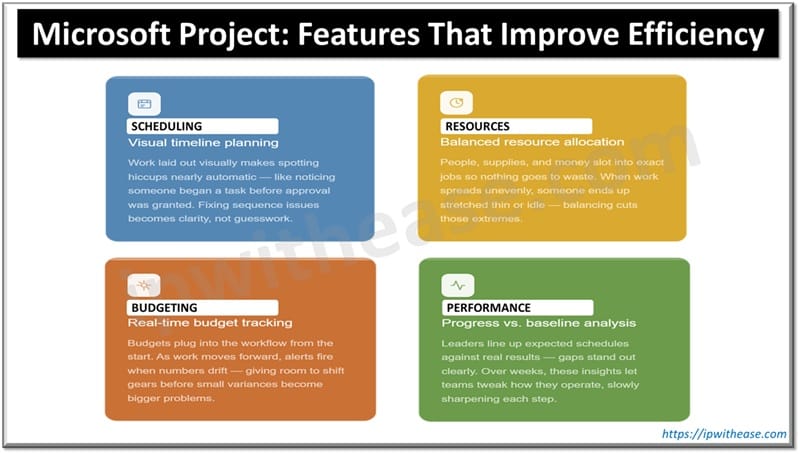
What stands out about Microsoft Project isn’t just what it does – but how many ways it lets you get there. Seeing work laid out like this? It makes spotting hiccups nearly automatic – like noticing someone forgot to wait for approval before starting. From adjustments to timing tweaks, fixing issues becomes less guesswork and more clarity.
Managing what you have sits at the center, too. People, supplies, money – slot them into exact jobs so nothing goes to waste. When work spreads unevenly, someone always ends up stretched thin or sitting idle. Balance cuts those extremes.
Right from the start, budgets plug into the workflow. As work moves forward, spending stays visible through constant check-ins. When numbers drift off track, alerts pop up – giving room to shift gears ahead of bigger issues. Seeing every dollar flow clearly helps teams own their choices, building steadier outcomes over time.
What helps boost output? Watching how far work has come. When leaders line up expected schedules against real results, they see what’s working – gaps stand out clearly. Over weeks, these insights let groups tweak how they operate, slowly sharpening each step.
Matching Versions to What You Need
One wrong pick here can cause more trouble than it solves. Whichever edition you go with, the features change a lot across options. The complexity of work tends to shape what works best. Bigger teams often need tools that handle more moving parts.
Stability over the years matters most when tools stay put without constant shifts. A fixed release of Microsoft Project keeps running steadily, changing little once set up. Instead of subscriptions that bring regular tweaks, some companies find comfort in software that does not surprise them. Predictable behavior beats frequent upgrades for teams focused on routine operations. Long deployments favor control, avoiding the ripple effects of new features arriving uninvited.
Yet flexibility stands out with cloud systems, since access works from nearly anywhere. When people join tasks across distances, cooperation stays smooth – perfect for working apart yet together. Knowing what sets each choice apart helps companies pick tools matching how they actually operate.
Works within Microsoft Tools
What stands out about Microsoft Project? It connects easily with other Microsoft apps. Not just Excel – Teams fits in too, along with SharePoint. Each tool links smoothly, so tasks flow without breaks between them.
No more shuffling data back and forth across separate systems. With updates flowing instantly, mistakes drop off while clarity grows. When each person sees what’s current, working together clicks into place smoothly.
Imagine changing a date on the timeline – those shifts show up right away in chat threads or files everyone uses. When things link like that, people stay on the same page without chasing updates, making it easier to work well.
Getting Ready for Use
Thinking about Microsoft Project? Start by looking at what your team actually needs. Some tasks demand less structure – knowing that shapes how you set up tools. The way you use it depends on what problems you’re solving.
Most people find the system tough at first, even though it does a lot. Because it has many parts, getting help early makes a difference. Learning how things work step by step helps everyone move forward without confusion. Knowing each feature saves time later on.
Starting by laying down simple rules for using the tool makes things run more smoothly. One way is deciding who does what, so tasks fit together better. Standards for adding information keep everyone on the same page at all times. Templates built ahead of time speed up work when starting new efforts. Consistency grows naturally when steps are set early without confusion creeping in later.
Tools for today’s Project Challenges
What sets Microsoft Project apart isn’t just the basics. Managing a collection of projects at once becomes simpler through built-in portfolio controls. These help teams keep track without dropping priorities. When effort is spread wisely, each initiative stands a better chance of staying on course.
From time to time, a clearer picture of how projects are doing comes through data review tools. When needed, specific summaries pop up showing what actually matters most. Because of that, people involved get better at choosing next steps. Spotting patterns becomes easier, workflows smoother, and future targets feel more within reach.
What keeps the software up is how easily it adjusts to new tools people plug into it. Shifting demands inside a company? It bends instead of breaking, staying useful far beyond the early stages.
Elevating Project Management Beyond Current Limits
Out of all the options floating around, one tool handles messy timelines without breaking a sweat. When schedules twist and teams stretch thin, this platform keeps tasks aligned through constant updates from everyone involved. Instead of guessing who does what, clarity comes fast because changes show up instantly across devices. Precision matters most when deadlines loom close, yet it still adapts whenever plans shift unexpectedly.
One thing leads to another when you start using it – strengths pile up fast. Because setup flows into daily tools without hiccups, handling tasks feels natural after a while. True, getting used to it takes some time at first. Yet rewards keep growing once the early bumps fade.
One step at a time, choosing the correct edition sets the stage. Training follows close behind, shaping how teams interact with the system. Support materials come into play when guidance is needed most. Performance begins to shift once these pieces align. Results grow sharper, processes smoother over weeks. Staying ahead becomes less about luck, more about consistency. The edge comes not from one move but from many small ones done well.
ABOUT THE AUTHOR

IPwithease is aimed at sharing knowledge across varied domains like Network, Security, Virtualization, Software, Wireless, etc.