Table of Contents
Photos quickly travel the internet. You post a photo on your social media profile, and in a few minutes, it might appear on others’ profiles, Reddit, blogs, and even YouTube videos.
The worst thing is, not everyone always uses the same photo with the same context. Some even modify them and change the context. Therefore, image security is essential for all netizens. Moreover, even if they see others’ photos, they should check if they are original or modified.
In this blog, we will learn how you can improve image security and how to detect altered and manipulated photos.
Let’s dive in!
Understanding Image Manipulation
Image manipulation is a deceptive activity. It’s generally done to change people’s perspective about photos.
Below are some common forms of manipulation:
- Splicing
- Cloning
- Retouching
- Deepfake Editing
- Color Adjustment Abuse
- Selective Cropping
Why You Should Detect Altered And Manipulated Visual Content?
Visual content often shapes opinions faster than written information. If an image carries false detail, it can influence judgment before facts get verified. That creates risk across media, business, and everyday communication.
Here are key reasons to detect manipulation:
- Maintain Trust
- Limit False Narratives
- Protect Reputation
- Improve Analysis Accuracy
- Reduce Fraud Exposure

Best Practices For Enhancing Image Security
Implement Security Policies
Clear rules guide how teams handle images from capture to sharing. Without structure, different people follow different habits, which creates weak points. A defined process removes confusion and sets expectations for everyone involved.
These policies should always be clear and detailed. They must explain access levels, approval steps, and storage rules. Moreover, everyone in the team must easily understand them. When they are clear and detailed, everyone adheres to policies and protects your content and reputation.
For that, you can arrange different training sessions. These training sessions can help stakeholders understand what you want. It also helps them note down key details that people might forget.
Apply Digital Watermarking Techniques
Watermarking adds hidden markers inside images that confirm origin or ownership. These markers stay invisible during normal use but become useful during verification checks. They act like a silent identity layer.
However, placement and strength require careful balance to protect image quality. Sometimes, people add watermarks, but they hide key details. That’s how they ruin their content. You must avoid this practice. Yes, they should be visible. However, they must be light so everyone can see the visual content and your watermarks as well.
Strong watermarking resists removal attempts while staying unnoticed. When applied properly, it supports tracking and discourages misuse.
Regularly Audit And Update Security
Security systems weaken over time if no one reviews them. Regular audits help find gaps in storage, sharing, or access control. These checks reveal issues before they grow into serious problems.
Updates should reflect current risks and working methods. Teams must review logs, permissions, and workflows on a schedule. This approach keeps the system active and aligned with real needs.
Use End-To-End Encryption For Transfers
Images become vulnerable while moving between systems or devices. Encryption protects them during this transfer stage. It ensures that only intended recipients can access the content.
Secure channels reduce the risk of interception or tampering. You should rely on trusted platforms for sharing sensitive visuals. This step keeps data intact during movement.
How To Detect Altered Content?
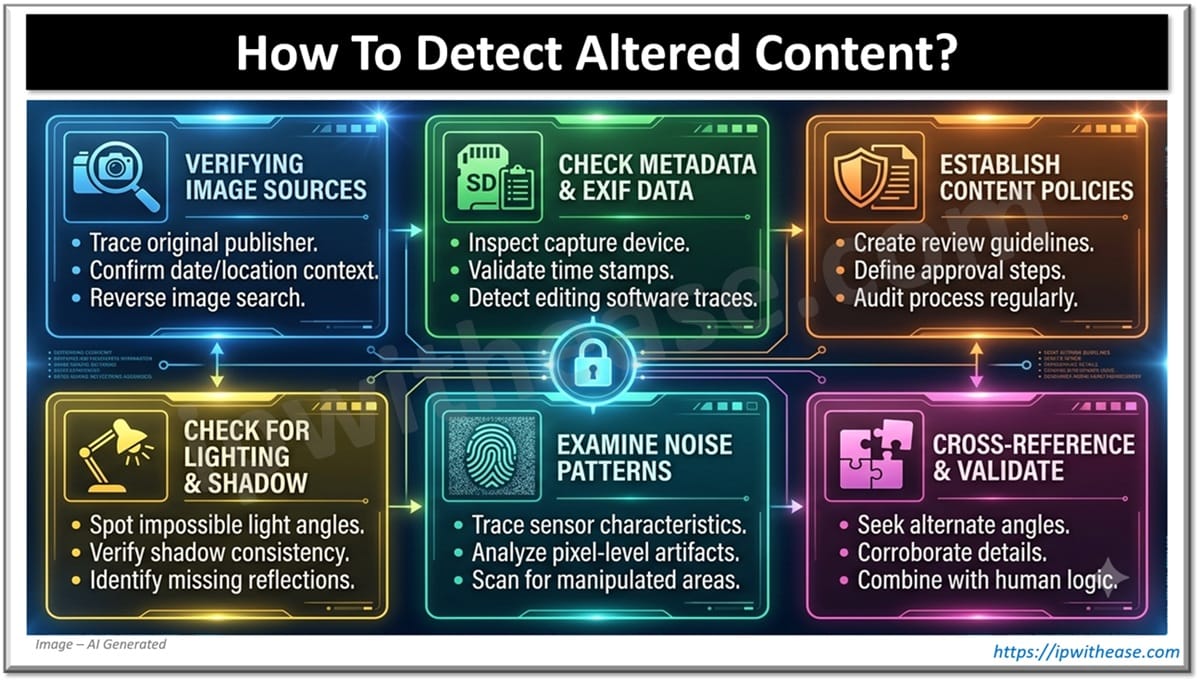
Verifying Image Sources
The first step involves checking where an image comes from. For that, you can use the AI image search tool. Simply provide it with the image, and the tool will help you locate where else the same photo appears. Explore all the shown results, check the posted dates, and you will get the actual source of the image.
When you find the same visual on different platforms, you might observe the differences in their context. Inconsistencies between versions often reveal hidden edits. Finding the source helps identify which version holds the original information.
Check Metadata And EXIF Data
Metadata contains technical details such as device type, capture time, and settings. EXIF data serves as a standard format for storing this information in images. These details often reveal useful clues.
Edited images sometimes show missing or unusual data fields. A mismatch in timestamps or device information can signal changes. With careful inspection, you can easily uncover irregularities and draw the right conclusion, based on evidence.
Establish Clear Content Verification Policies
Verification becomes inconsistent when teams rely on personal judgment alone. Clear policies define how to review and approve images before use. If you have given the image-verification task to your team, provide them with all the guidelines in a clear format. This structure keeps the process reliable.
And guidelines should include all the details, including tools, steps, and decision rules. Remember, your team needs direction on handling suspicious content, as consistent practice reduces mistakes and improves confidence in results.
Check For Lighting And Shadow Inconsistencies
Light behaves in predictable ways within a real scene. Objects should follow the same direction and intensity of light. Differences often point to added or removed elements.
But these clues require close observation of shadows and highlights. If shadows fall in different directions, something feels off. Such details often expose manipulation.
Examine Noise Patterns And Sensor Characteristics
Every camera produces a natural grain pattern within images. This pattern stays consistent across the frame when the image remains untouched. It acts like a fingerprint of the device.
And uneven patterns suggest that parts come from different sources. Edited areas may show a different texture or clarity. Careful comparison helps detect these subtle differences.
Conclusion
Image security depends on steady attention rather than occasional checks. Even small edits can reshape meaning, which makes detection an essential practice. Clear methods and disciplined handling reduce exposure to risk. And consistent application of these steps builds long-term reliability. When teams treat verification as a routine task, they protect both information quality and trust. Strong habits lead to more dependable visual communication.
ABOUT THE AUTHOR

IPwithease is aimed at sharing knowledge across varied domains like Network, Security, Virtualization, Software, Wireless, etc.